Eyelid Surgery: Medical and Cosmetic Benefits and Recovery Steps
Discover eyelid surgery with Dr. Khalil Hijazi, including its medical and cosmetic benefits, surgical steps, recovery stages, and expected results.
Eyelid surgery can serve both cosmetic and functional purposes, depending on the condition of the upper or lower eyelids. Excess skin, changes in the surrounding tissues, and age-related eyelid changes may affect facial appearance, while significant upper eyelid drooping can sometimes interfere with the visual field. For this reason, eyelid surgery should be planned according to the patient’s anatomy, eye function, and individual expectations.
A proper assessment is the foundation for choosing the right approach. At Dr. Khalil Ibrahim Hijazi Consultant & Ophthalmic Surgeon, eyelid procedures are considered from both an ophthalmic and aesthetic perspective, with attention to eyelid function, eye protection, natural appearance, and appropriate recovery.
Eyelid Surgery and the Medical and Cosmetic Reasons for the Procedure
Eyelid surgery is designed to address excess skin, fat, or tissue around the upper or lower eyelids. Depending on the patient’s needs, it may be performed primarily for cosmetic improvement or for functional reasons when eyelid changes interfere with vision or normal eyelid function.
There is no single technique that is suitable for every patient. Age, skin elasticity, eyelid structure, muscle function, fat distribution, and existing eye conditions can all influence the surgical plan. A detailed ophthalmic evaluation therefore comes before selecting the procedure.
What Is Eyelid Surgery?
Eyelid surgery is a precise procedure involving the upper eyelids, lower eyelids, or both. It may address excess skin, prominent fat pockets, or other age-related changes while preserving normal eyelid movement and closure.
Because the eyelids protect the ocular surface and contribute to tear distribution, the procedure requires more than a purely cosmetic approach. Careful planning aims to achieve a balanced appearance without compromising the protective function of the eyelids.
Medical Reasons for Eyelid Surgery
One of the main medical reasons for eyelid surgery is excessive upper eyelid skin that reduces the upper visual field. Patients may also experience a feeling of heaviness around the eyes or frequently raise their eyebrows to compensate for drooping skin.
Other eyelid disorders may also require surgical management, depending on their underlying cause. The ophthalmic assessment helps determine whether the problem is caused by excess skin, eyelid muscle dysfunction, tissue changes, or another condition requiring a different treatment strategy.
Treating Eyelid Drooping and Improving Eye Appearance
Treatment for eyelid drooping depends on its underlying cause. Excess skin, changes in fat distribution, muscle weakness, or a combination of factors may contribute to the appearance of drooping eyelids.
When surgery is appropriate, the objective is not simply to remove tissue but to create a balanced result while preserving eyelid function. In mild cases, surgery may not be necessary, whereas more significant functional or cosmetic changes may justify an operative approach.
Benefits of Eyelid Surgery and Improving Eye Function
The benefits of eyelid surgery can extend beyond cosmetic enhancement when excess upper eyelid tissue affects the visual field. From an aesthetic perspective, the procedure may reduce the appearance of excess skin and puffiness and create a more refreshed and balanced appearance around the eyes.
The final outcome depends on accurate diagnosis, appropriate technique, tissue characteristics, and healing. A conservative approach is often important because the goal is to improve the appearance of the eyes without creating an unnatural facial expression.
Cosmetic Benefits of Eyelid Surgery
The cosmetic benefits of eyelid surgery may include reducing excess skin and visible puffiness around the eyes. By improving the contour of the eyelids, the procedure can create a more harmonious relationship between the eyes and the rest of the face.
The procedure does not stop the natural aging process. Instead, it addresses existing structural changes. The result depends on skin elasticity, the amount of excess tissue, fat distribution, and the patient’s individual eyelid anatomy.
Medical Benefits of Eyelid Surgery for Better Vision
When excess upper eyelid skin obstructs part of the visual field, appropriately planned eyelid surgery may improve the functional aspect of vision by removing the tissue responsible for the obstruction.
However, not every drooping eyelid has the same cause. Muscle-related eyelid problems or other conditions may require a different approach. A complete examination is therefore essential before selecting the appropriate surgical procedure.
The Effect of Eyelid Lifting on Facial Appearance
The eye area has a major influence on the overall facial appearance. Treating excess eyelid skin and puffiness may make the eyes look more open and refreshed while improving facial balance.
The ideal result should preserve the patient’s natural appearance rather than create an exaggerated change. This makes surgical planning, anatomical knowledge, and experience with eyelid procedures important factors in achieving a harmonious outcome.
Aspect | Medical Benefits | Cosmetic Benefits / Recovery Stage |
|---|---|---|
Improved Field of Vision | May improve vision when upper eyelid drooping blocks part of the visual field | Creates a more open and refreshed appearance around the eyes |
Removal of Excess Skin | May reduce eyelid heaviness or the effect of excess skin on vision | Helps improve eyelid appearance and reduce sagging |
Reduction of Puffiness | Some cases of prominent fat around the eyelids can be treated depending on the condition | Creates a more balanced appearance around the eyes |
Early Recovery | — | Swelling and bruising may occur during the first few days, followed by gradual improvement |
Postoperative Care | Following the surgeon’s instructions helps reduce complications and support healing | Avoid eye strain and rubbing, and follow prescribed medications and appointments |
Return to Daily Activities | Depends on the type of procedure and individual recovery | Activities can be resumed gradually according to medical advice |
Final Results | Depend on the functional problem being treated | The final appearance develops gradually as swelling decreases and tissues settle |
Steps of Eyelid Surgery and the Surgical Process
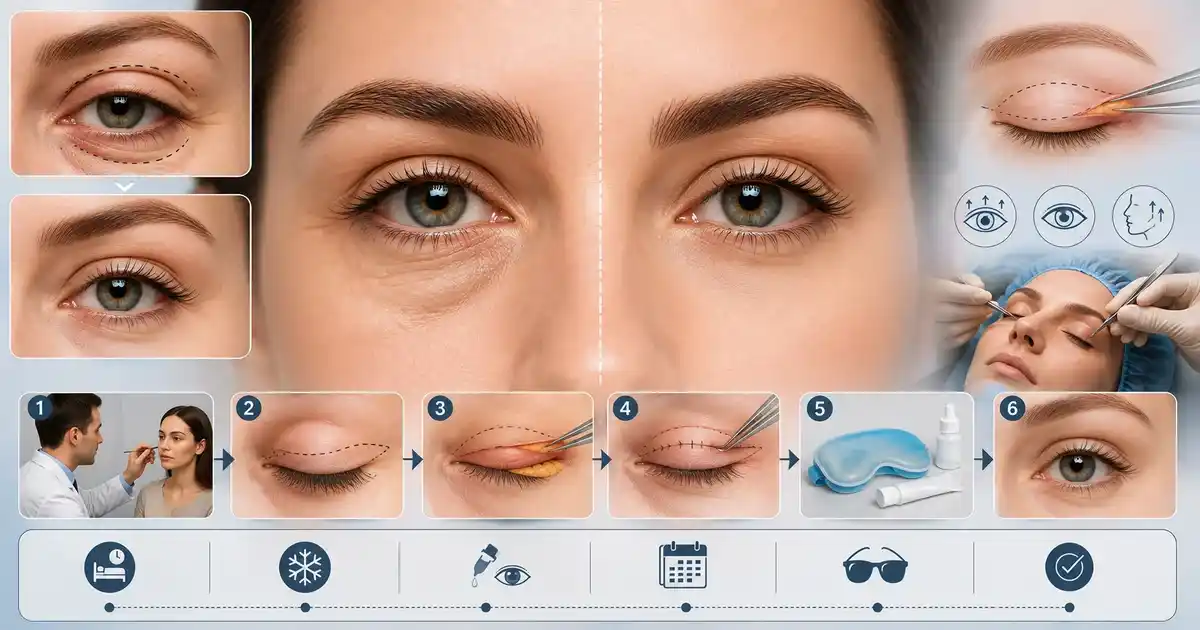
The process begins with a detailed evaluation of the eyelids and eyes, followed by identification of the tissues and functional concerns that need to be addressed. The surgical plan may involve the upper eyelids, lower eyelids, or both.
The anesthesia approach and surgical technique depend on the extent of the procedure and the individual patient. Before surgery, the physician also discusses preparation, expected recovery, possible risks, and realistic outcomes.
Preparation Before Eyelid Surgery
Preparation may include an eye examination, assessment of eyelid movement and closure, review of vision, and evaluation of the patient’s medical history and medications. Certain medications or medical conditions may require special consideration because they can influence bleeding or healing.
Patients should also mention symptoms such as dry eyes, allergies, previous eyelid procedures, or other eye conditions. Accurate medical information helps the surgeon create a safer and more individualized plan.
Steps of Upper and Lower Eyelid Lifting
In upper and lower eyelid lifting, incision placement is planned according to the eyelid anatomy and the amount of excess skin or fat. Upper eyelid incisions can often be positioned within the natural eyelid crease, while lower eyelid techniques vary depending on the presence of excess skin and fat.
The aim is not to remove as much tissue as possible. Instead, the surgeon balances tissue removal or repositioning with preservation of eyelid support and closure. This balance is essential for both functional safety and natural appearance.
Modern Laser Techniques in Eyelid Aesthetics
Laser technology may have a role in selected procedures involving the eyelids or surrounding skin, but laser eyelid treatment does not necessarily replace conventional eyelid surgery in every case.
The most appropriate approach depends on the underlying problem. If excess skin or deeper structural changes require surgical correction, conventional surgery may be more suitable. Other technologies can be considered when they address a specific aspect of the patient’s condition.
Recovery After Eyelid Surgery and Expected Results
Recovery after eyelid surgery requires patience and careful adherence to medical instructions. Swelling and bruising around the eyes are common during the early recovery period and generally improve progressively.
Recovery time varies between patients depending on the type and extent of surgery and individual healing characteristics. Early postoperative appearance should therefore not be considered the final result.
Stages of Healing After Eyelid Surgery
The stages of healing after eyelid surgery generally involve gradual reduction of swelling and bruising, followed by progressive improvement in eyelid contour and tissue stabilization.
Patients should follow instructions regarding hygiene, prescribed medication, physical activity, and eye protection. Rubbing or applying pressure to the eyelids should be avoided during the healing period unless specifically advised otherwise by the physician.
Eyelid Surgery Results and When They Appear
Initial improvements become more noticeable as swelling decreases, but eyelid surgery results continue to evolve as the tissues settle. The timing of the final appearance varies depending on the procedure and individual healing response.
The most satisfactory results usually come from realistic expectations and a surgical plan based on the patient’s own anatomy. Comparing one patient’s result with another is not a reliable way to predict an individual outcome.
Postoperative Eyelid Care Tips
Postoperative care includes following the surgeon’s instructions, keeping the treated area clean, and using prescribed medications or eye drops as directed. Temporary limitations on physical activity may also be recommended to minimize swelling.
Severe pain, sudden visual changes, unusual discharge, or rapidly increasing swelling should be reported promptly. Appropriate follow-up helps detect potential problems early and supports a smoother recovery.
Risks and Important Factors Before Choosing Eyelid Surgery
Like any surgical procedure, eyelid surgery carries potential risks. Careful assessment, appropriate technique, experienced surgical planning, and proper follow-up can help reduce these risks.
Patients should not make their decision based only on the cost of eyelid surgery. The complexity of the procedure, surgeon experience, anesthesia, postoperative care, and individual medical needs all contribute to the overall treatment plan.
Possible Risks of Eyelid Surgery
Possible risks of eyelid surgery may include swelling, bruising, temporary irritation, dry eyes, or changes in eyelid position. In some cases, temporary difficulty closing the eyes can occur. The likelihood of complications depends on the procedure and the patient’s individual anatomy and medical history.
Patients with pre-existing dry eye or previous eyelid surgery should discuss these factors in detail before treatment. Good planning aims to protect eye function while achieving the intended cosmetic or medical improvement.
Choosing the Best Eyelid Surgeon
When looking for the best eyelid surgeon, patients should consider ophthalmic and eyelid surgery experience rather than relying only on promotional claims. A thorough assessment and clear discussion of expectations are essential before surgery.
Dr. Khalil Ibrahim Hijazi focuses on ophthalmic surgery and eyelid procedures with attention to both functional and aesthetic considerations. The treatment approach is selected after evaluating the individual condition rather than applying one technique to every patient.
Factors Affecting the Cost of Eyelid Surgery
The cost of eyelid surgery can vary according to whether the procedure involves the upper eyelids, lower eyelids, or both, as well as the complexity of the case, surgical technique, anesthesia, and follow-up requirements.
For this reason, a universal cost cannot be determined without an assessment. Safety, surgical expertise, appropriate technique, and postoperative follow-up should remain important considerations when comparing treatment options.
Conclusion
Eyelid surgery can offer both medical and cosmetic benefits when carefully selected for the right patient. It may improve the appearance of excess skin and puffiness while also addressing functional problems when eyelid changes interfere with vision or normal eyelid function.
The best results begin with a detailed ophthalmic evaluation, an understanding of the cause of eyelid changes, and a treatment plan tailored to the patient’s anatomy. At Dr. Khalil Ibrahim Hijazi Consultant & Ophthalmic Surgeon, eyelid care is approached with attention to eye safety, natural facial balance, and structured postoperative follow-up.
Modern eyelid surgery offers several approaches, but the most appropriate technique is determined by the patient’s condition rather than by the name of the technology alone. Exploring the available options with Dr. Khalil Hijazi can help clarify the most suitable path for functional and aesthetic eyelid care.
Frequently Asked Questions
Related Articles
Eyelid Reconstruction After Injuries and the Main Stages of Medical Recovery
Eyelid reconstruction after injury can restore eyelid function and appearance while reducing complications. Learn about treatment and recovery with Dr. Khalil.
Removing Eyelid Bags: When Is Surgery the Best Option?
Learn about the causes of under-eye bags, when surgical eyelid bag removal may be appropriate, the main treatment options, expected results, risks, and recovery with Dr. Khalil.
Ptosis Treatment and Its Effect on Improving Vision and External Appearance
Learn with Dr. Khalil about ptosis treatment, its main causes and symptoms, and how corrective procedures and surgery can improve vision and eye symmetry, along with the recovery process.
Retinal Tear: How Is It Diagnosed and Treated Before Vision Loss?
A retinal tear may cause sudden floaters or flashes and requires timely diagnosis and appropriate treatment before it progresses to retinal detachment and vision loss.