Ptosis Treatment and Its Effect on Improving Vision and External Appearance
Learn with Dr. Khalil about ptosis treatment, its main causes and symptoms, and how corrective procedures and surgery can improve vision and eye symmetry, along with the recovery process.
Ptosis may initially appear to be a minor change in the appearance of the eyes, but it can become a functional concern when the upper eyelid covers part of the visual field or causes the patient to raise the eyebrows or tilt the head to see more clearly. The condition can have different causes and degrees of severity, so treatment should be based on a careful assessment rather than appearance alone. Age-related tissue changes, weakness of the eyelid-lifting mechanism, congenital factors, previous injury, and certain neuromuscular conditions can all play a role. At Dr. Khalil Ibrahim Hijazi Consultant & Ophthalmic Surgeon, eyelid position, muscle function, visual impact, and facial symmetry are assessed to determine the most appropriate approach. Depending on the case, treatment may focus on visual function, appearance, or both.
Causes of Ptosis and Its Effect on Vision
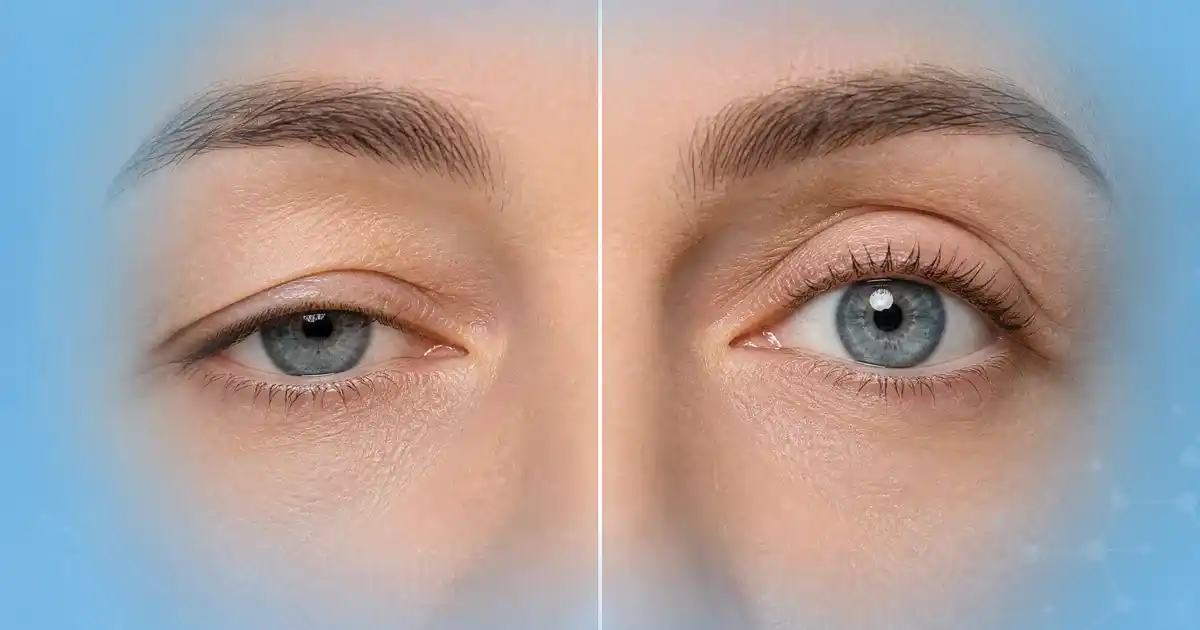
Ptosis occurs when the upper eyelid sits lower than its normal position. It may affect one eye or both eyes and can range from mild asymmetry to significant obstruction of the visual field. The causes of ptosis are varied and may include age-related changes, reduced levator muscle function, altered supporting tissues, previous trauma, or neurological and muscular factors.
For this reason, ptosis treatment begins with identifying the underlying cause and evaluating the degree of eyelid descent. A detailed assessment can also distinguish true ptosis from excess upper-eyelid skin, helping determine whether observation or corrective treatment is appropriate.
Causes of Ptosis
The causes of ptosis vary according to age, onset, muscle function, and the condition of the surrounding tissues. Common causes include:
Age-related stretching or weakening of eyelid-supporting tissues.
Reduced function of the levator muscle.
Changes in the attachment of the levator mechanism.
Previous trauma involving the eyelid or surrounding area.
Certain neurological or neuromuscular conditions.
Congenital ptosis present since childhood.
The onset of the condition is also important. Gradual eyelid drooping may have a different cause from sudden ptosis. Identifying the cause is therefore an essential part of choosing the appropriate treatment.
Ptosis and Its Effect on Vision
Ptosis and its effect on vision become more apparent when the upper eyelid blocks part of the visual field. Patients may compensate by raising their eyebrows or tilting their heads backward, which can contribute to forehead and eye fatigue.
Mild ptosis may have little effect on vision, while more advanced cases can interfere with reading, screen use, and activities that require a wider field of vision. Treatment therefore aims to improve eyelid position when there is functional obstruction while preserving comfortable eyelid closure.
Symptoms of Ptosis
Symptoms of ptosis vary according to its severity and underlying cause. Common signs include:
Noticeable upper-eyelid drooping.
Reduced upper visual field.
Frequent eyebrow elevation.
Head tilting to improve vision.
Forehead or eye fatigue.
Visible difference between the two eyelids.
Increased discomfort during prolonged visual tasks.
Sudden-onset ptosis, particularly when accompanied by other unusual visual or neurological symptoms, should be medically assessed before corrective treatment is considered.
Ptosis Treatment and Improving the Visual Field
Ptosis treatment depends on the cause, degree of eyelid descent, levator muscle function, and effect on vision. Not every case requires surgery. Mild and stable ptosis without significant functional symptoms may simply require observation.
When the eyelid significantly obstructs the visual field or causes persistent compensatory movements, corrective treatment may be appropriate. Assessment generally considers eyelid height, levator function, eyebrow position, excess skin, and overall ocular health.
Upper Eyelid Ptosis Treatment
Upper eyelid ptosis treatment aims to improve the position of the eyelid margin while preserving normal function. When the problem is related to weakness or laxity of the eyelid-lifting mechanism, surgery may be considered according to the examination findings.
The procedure varies according to levator function and severity. Excess skin may also be assessed, but removing skin alone does not necessarily correct true ptosis. The goal is a balanced eyelid position that improves vision while maintaining natural appearance and comfortable closure.
Best Treatment for Ptosis
There is no single best treatment for ptosis that applies to every patient. The appropriate option depends on the cause, severity, levator function, age, and general eye condition.
Observation may be appropriate for mild cases, while surgery may provide greater benefit when ptosis restricts the visual field or causes significant asymmetry.
The best treatment for ptosis is therefore the approach that addresses the underlying problem while protecting eyelid function and maintaining a balanced appearance.
Ptosis Correction
Ptosis correction requires careful assessment of eyelid height, levator function, eyebrow position, and surrounding skin. The difference between the two eyes is also considered when planning the degree of correction.
Key goals include:
Improving eyelid position.
Expanding the visual field when necessary.
Reducing eyelid asymmetry.
Preserving comfortable eyelid closure.
Achieving a natural-looking result.
Follow-up is important because eyelid position can continue to stabilize as swelling decreases and tissues heal.
Ptosis Surgery for Improving External Appearance
Ptosis surgery can improve the external appearance of the eyes when a low eyelid creates noticeable asymmetry or a tired appearance. However, the cosmetic aspect should not be considered separately when the condition also affects vision.
Planning considers the relationship between the eyelid, eyebrow, skin, and surrounding tissues. When functional and cosmetic concerns occur together, treatment can be designed to address both while preserving eyelid function.
Ptosis Surgery
Ptosis surgery is considered when examination indicates that correction can provide meaningful functional or aesthetic benefit. Depending on muscle function and severity, the procedure may involve modifying or improving the mechanism responsible for lifting the eyelid.
The degree of correction is carefully determined to avoid excessive elevation or inadequate correction. Maintaining comfortable eyelid closure is also an important consideration.
Temporary swelling and bruising may occur after surgery, followed by gradual improvement as healing progresses.
Eyelid Lift Surgery
Eyelid lift surgery primarily addresses excess skin and age-related changes in the tissues around the eyes, while true ptosis involves a low position of the eyelid margin.
Both problems can occur in the same patient. In such cases, each component should be evaluated separately. Removing excess skin alone does not necessarily correct ptosis caused by reduced levator muscle function.
Treatment of Eyelid Laxity
Treatment of eyelid laxity depends on the tissues involved. In some cases, laxity affects the supporting structures, while in others it is associated with changes in the eyelid-lifting mechanism.
Surgical correction may be considered when laxity causes significant drooping or affects the visual field. The ability to close the eye and the condition of the ocular surface should also be assessed before treatment.
When Do You Need Ptosis Treatment?
Not every mild eyelid droop requires intervention. However, ptosis treatment becomes more relevant when the condition restricts vision, causes repeated forehead strain, changes head posture, or produces significant asymmetry.
Sudden eyelid drooping should be medically assessed to determine its cause. The treatment decision should be based on severity and functional impact rather than appearance alone.
Signs That Ptosis Treatment May Be Needed
A specialist evaluation may be appropriate when the patient experiences:
Noticeable reduction in the visual field.
Persistent eyebrow elevation.
Difficulty reading or concentrating for long periods.
Changes in head position to improve vision.
Significant eyelid asymmetry.
Progressive drooping.
A noticeable change in facial appearance.
These signs do not automatically mean surgery is required, but they indicate the value of a detailed assessment.
Effect of Ptosis on Quality of Life
Ptosis may affect daily activities when the eyelid significantly limits the visual field. Reading, prolonged screen use, and tasks requiring sustained visual attention may become more tiring.
Constant eyebrow elevation may also contribute to forehead fatigue. From an aesthetic perspective, uneven eyelid position can make the eyes appear tired or asymmetrical.
For this reason, assessment should consider both functional and cosmetic effects rather than focusing on only one aspect.
Ptosis Treatment Options
Condition | Possible approach | Main goal |
|---|---|---|
Mild, stable ptosis | Observation and assessment | Monitor the condition |
Ptosis affecting vision | Appropriate correction | Improve visual field |
Reduced muscle function | Technique based on muscle function | Improve eyelid elevation |
Ptosis with excess skin | Assessment of both problems | Improve function and appearance |
Sudden ptosis | Prompt medical assessment | Identify the cause |
Ptosis Surgery Cost and Treatment Results
The cost of ptosis surgery varies between patients and cannot be represented by one fixed amount. Factors include the severity of ptosis, whether one or both eyes are affected, levator muscle function, the required technique, and any additional eyelid changes.
For this reason, the cost is more accurately determined after examination and treatment planning. This allows the patient to understand the procedure and its purpose rather than relying on a general figure that may not reflect individual needs.
Ptosis Surgery Cost
Ptosis surgery cost depends on several medical factors, including the degree of eyelid descent, muscle function, the required technique, and the complexity of correction.
The treatment plan may also differ when one eye is affected compared with both eyes, or when excess skin and other eyelid changes are present. An examination is therefore important for establishing an appropriate treatment plan and cost.
Ptosis Surgery Results
The results of ptosis surgery are intended to improve eyelid position and, when necessary, reduce visual obstruction while improving eyelid symmetry.
Results vary according to the cause, severity, muscle function, and surrounding tissue characteristics. Swelling may make the early appearance different from the final result, and the eyelid usually continues to stabilize during healing.
Important factors include:
Accurate diagnosis.
Appropriate technique selection.
Careful correction.
Following recovery instructions.
Regular follow-up.
Recovery After Ptosis Surgery
Recovery after ptosis surgery varies between individuals. Swelling and bruising may occur during the early stage and generally improve gradually.
During recovery, patients should:
Attend follow-up appointments.
Use prescribed medications as directed.
Avoid rubbing or pressing on the eyelid.
Follow activity restrictions when advised.
Avoid judging the final result too early.
Any unusual visual change or significant difficulty closing the eye should be reported to the treating doctor.
Conclusion
Successful management of ptosis depends on understanding why the eyelid has descended and how significantly the condition affects eye function. Some patients mainly need improved visual field, while others are concerned about eyelid symmetry, and some require attention to both aspects. A specialized assessment helps determine the most suitable approach while preserving eyelid function and ocular protection. At Dr. Khalil Ibrahim Hijazi Consultant & Ophthalmic Surgeon, each case is evaluated according to its individual characteristics, with attention to natural proportions and realistic expectations. When ptosis begins to affect vision or appearance, a careful assessment can clarify the condition and the available treatment options.
Frequently Asked Questions
Related Articles
Eyelid Reconstruction After Injuries and the Main Stages of Medical Recovery
Eyelid reconstruction after injury can restore eyelid function and appearance while reducing complications. Learn about treatment and recovery with Dr. Khalil.
Removing Eyelid Bags: When Is Surgery the Best Option?
Learn about the causes of under-eye bags, when surgical eyelid bag removal may be appropriate, the main treatment options, expected results, risks, and recovery with Dr. Khalil.
Eyelid Surgery: Medical and Cosmetic Benefits and Recovery Steps
Discover eyelid surgery with Dr. Khalil Hijazi, including its medical and cosmetic benefits, surgical steps, recovery stages, and expected results.
Retinal Tear: How Is It Diagnosed and Treated Before Vision Loss?
A retinal tear may cause sudden floaters or flashes and requires timely diagnosis and appropriate treatment before it progresses to retinal detachment and vision loss.