
Retinal Detachment: Warning Signs That Should Not Be Ignored
Retinal detachment can threaten vision when diagnosis is delayed. Dr. Khalil explains the main symptoms, warning signs, diagnosis, and treatment options.
Retinal detachment is an eye condition that requires prompt attention when new or unusual visual changes appear. Some warning signs may initially seem minor, such as flashes of light or a sudden increase in floaters, but they can sometimes indicate retinal traction or a retinal tear that may progress to detachment. Other symptoms, including a shadow, curtain, or loss of part of the visual field, may indicate a more advanced problem. Recognizing the symptoms of retinal detachment does not mean diagnosing the condition yourself; rather, it helps you understand when a retinal examination becomes important. With Dr. Khalil Ibrahim Hijazi Consultant & Ophthalmic Surgeon, patients can receive a detailed retinal assessment and an individualized treatment plan based on the location and extent of the problem.
What Is Retinal Detachment and What Causes It?
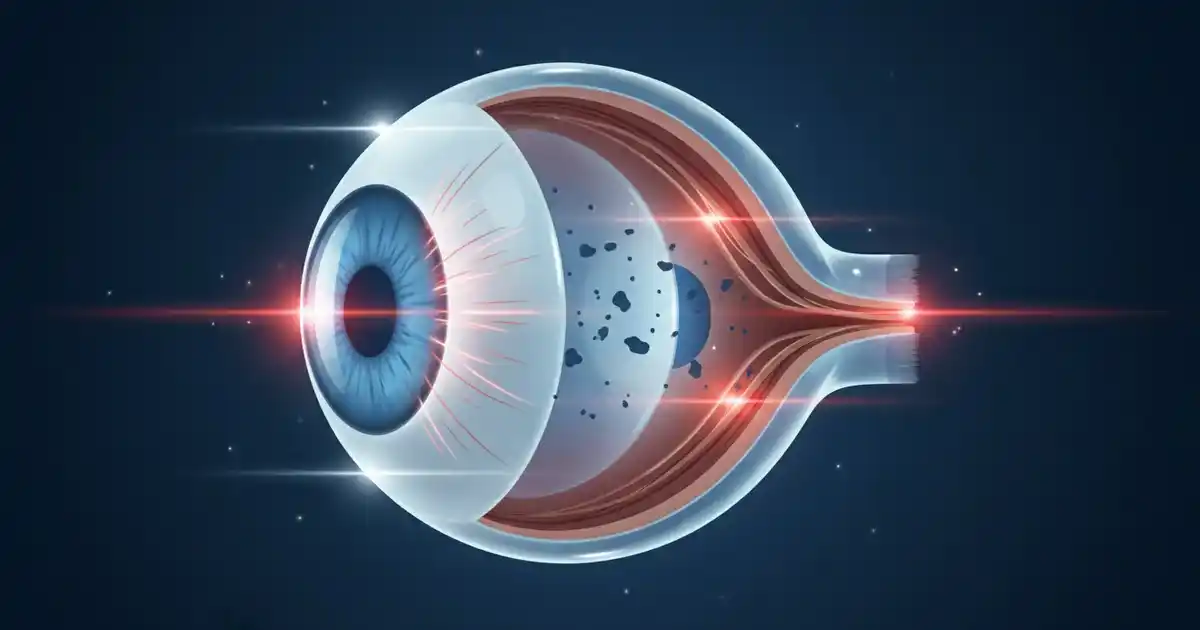
Retinal detachment occurs when the light-sensitive retina separates from its normal position at the back of the eye. Because the retina is responsible for receiving light and transmitting visual signals to the brain, separation can interfere with vision. In some cases, a retinal tear allows fluid to pass behind the retina, causing the detached area to expand. The condition can vary significantly between patients depending on the location, size, duration, and effect on central vision.
Causes of Retinal Detachment
The causes of retinal detachment are varied. Age-related changes in the vitreous can increase traction on the retina, particularly in people with high myopia or a previous history of retinal problems. Eye injuries, previous eye surgery, retinal tears, and certain conditions affecting the internal structures of the eye may also increase the risk.
A previous retinal detachment in the other eye or a family history of the condition may also warrant closer attention to new visual symptoms. Having a risk factor does not mean retinal detachment will definitely occur, but it makes sudden flashes, new floaters, or changes in the visual field more important to evaluate.
Sudden Retinal Detachment
Sudden retinal detachment may develop over a short period and can progress from relatively subtle visual changes to a dark area or loss of part of the visual field. The speed of progression varies, and retinal detachment may occur without significant pain. In some cases, the problem begins with a small retinal tear before developing into an actual detachment.
When new symptoms appear suddenly, prompt assessment can determine whether a retinal tear or detachment is present. Early detection may allow appropriate treatment before the detachment extends toward areas that are more important for central vision.
Is Retinal Detachment Serious?
Yes. Retinal detachment can be serious because prolonged separation of the retina from its normal position can damage light-sensitive retinal cells and may result in permanent visual impairment. However, the severity is not identical in every case. It depends on where the detachment is located, how extensive it is, how long it has been present, and whether central vision has been affected.
This is why the question “Is retinal detachment serious?” cannot be answered from symptoms alone. A detailed retinal examination is necessary to determine the extent of the problem and guide treatment.
What Are the Early Symptoms of Retinal Detachment?
Early symptoms of retinal detachment may include new flashes of light, a sudden increase in floaters, a shadow or curtain in part of the visual field, or changes in the quality of vision. Some patients may experience blurred vision or progressive loss of part of their field of view. Importantly, pain is not required for retinal detachment to occur.
A change in the pattern of symptoms is particularly important. A few longstanding floaters may be relatively common, but a sudden increase in floaters, especially when accompanied by flashes or a dark area in vision, should be evaluated.
Symptoms of Retinal Detachment
The symptoms of retinal detachment can appear suddenly or develop progressively. Common symptoms include flashes of light, especially toward the edges of vision, a sudden increase in floaters, new black dots or thread-like shapes, a curtain or shadow across part of the visual field, and blurred vision.
Symptoms vary between patients, and some early changes may actually result from a retinal tear before a complete detachment occurs. For this reason, several new visual symptoms occurring together deserve prompt medical attention rather than observation at home.
Signs of Retinal Detachment
Important signs of retinal detachment include a new shadow or curtain in the visual field, loss of peripheral vision, repeated flashes, a sudden increase in floaters, and unusual visual distortion or blurring.
These signs do not necessarily prove that a retinal detachment has already occurred. They may indicate a retinal tear or another retinal change that requires urgent assessment. Delaying an examination simply to see whether the symptoms disappear is not recommended.
Symptoms of a Retinal Tear
The symptoms of a retinal tear can resemble early symptoms of retinal detachment, making it impossible to reliably distinguish the two based on symptoms alone. New flashes and a sudden increase in floaters may occur when the vitreous pulls on the retina or when a retinal tear develops.
Early detection matters because some retinal tears can be treated before they progress to retinal detachment. A new and sudden change in vision therefore warrants a retinal examination, including evaluation of the peripheral retina when appropriate.
What Warning Signs Require Prompt Medical Attention?
Certain warning signs of retinal detachment require prompt attention, particularly when they appear for the first time or change significantly over a short period. These include a sudden increase in floaters, repeated flashes of light, a curtain or shadow in the visual field, and loss of peripheral vision.
These symptoms may be associated with a retinal tear or detachment, and an examination is needed to determine the actual cause. Importantly, the absence of pain does not rule out a serious retinal problem.
Warning Signs of Retinal Detachment
Key warning signs of retinal detachment include a large number of new floaters appearing over a short time, repeated flashes of light, a shadow or curtain that moves or expands, and an area of the visual field that seems to be missing.
These findings do not automatically mean that detachment has occurred, but they can indicate a retinal tear or another retinal abnormality. Even if symptoms temporarily improve, medical assessment remains important because retinal problems may progress despite changes in how symptoms are perceived.
Eye Flashes and Retinal Detachment
Eye flashes and retinal detachment can sometimes be related to vitreous traction on the retina. Flashes may appear as brief lines or streaks, particularly in peripheral vision or in dim lighting. However, flashes do not automatically mean retinal detachment, as they may have other causes.
New, sudden, or repeated flashes become more concerning when they occur together with new floaters or a loss of part of the visual field. A retinal examination can determine whether there is a tear or another change requiring treatment.
Eye Floaters and Retinal Detachment
Eye floaters and retinal detachment may be connected when floaters suddenly increase in number or become significantly different from usual. Floaters may appear as dots, threads, or small shapes moving across the field of vision. They can occur with normal vitreous changes, but they may also appear when there is vitreous traction or a retinal tear.
A sudden increase in floaters is particularly important when accompanied by flashes or a shadow in vision. Early assessment may reveal a retinal tear before it progresses to a larger retinal detachment.
Warning sign | What it may indicate | Importance of assessment |
|---|---|---|
Sudden increase in floaters | Vitreous change or retinal tear | High when newly developed |
Flashes of light | Retinal traction or vitreous changes | Assessment is important when new |
Shadow or curtain | Possible retinal detachment | Urgent assessment |
Sudden blurred vision | Retinal or other eye problem | Depends on severity |
Loss of part of the visual field | Possible progression of detachment | Requires prompt assessment |
How Is Retinal Detachment Diagnosed and Treated?
Diagnosis of retinal detachment relies on a detailed eye and retinal examination. The pupil may be dilated so the doctor can evaluate different areas of the retina and identify tears, weak areas, or fluid behind the retina. The location and extent of any detachment and its effect on central vision are also assessed.
Once the condition has been identified, treatment of retinal detachment is selected according to the type, location, and extent of the problem, as well as the condition of the vitreous and the effect on vision. Treatment may aim to seal a tear, reposition the retina, or prevent further separation.
Diagnosis of Retinal Detachment
The diagnosis of retinal detachment begins with a detailed history of symptoms, including when flashes or floaters started and whether the visual field has changed. The eye is then examined, and a dilated retinal examination is often an important part of the assessment.
In some situations, ultrasound or additional imaging may be needed when the retina cannot be fully visualized. Early diagnosis helps determine the appropriate treatment before the condition becomes more extensive or causes additional visual damage.
Treatment of Retinal Detachment
Treatment of retinal detachment depends on the nature of the retinal problem. If a retinal tear is present without a significant detachment, a localized procedure may sometimes be used to surround and stabilize the tear and prevent fluid from passing underneath the retina. When an actual retinal detachment is present, surgery may be required to reposition the retina and address the underlying cause.
The treatment decision depends on more than the diagnosis itself. The location and size of the detachment, the vitreous condition, and whether central vision is affected all influence the treatment plan. Follow-up is also important after treatment.
When Does Retinal Detachment Require Surgery?
The answer to when retinal detachment requires surgery depends on whether a true detachment is present, its size and location, the presence of a tear or vitreous traction, and the degree of visual involvement. Some limited tears may be treated with localized procedures, while an actual retinal detachment often requires surgery to restore the retina to its normal position.
Timing becomes especially important when the detachment is approaching or affecting central vision. Therefore, the need for surgery cannot be determined from symptoms alone and requires a specialized retinal examination.
When Does Vision Loss Become an Emergency?
Sudden vision loss requires urgent assessment when it occurs unexpectedly, especially when accompanied by new flashes, floaters, or a shadow in the visual field. Retinal detachment and retinal tears are possible causes, although other eye or medical conditions can also produce sudden visual changes.
Any sudden change in vision deserves attention, particularly if it affects one eye or progresses over several hours. When the retina is involved, early evaluation may provide a better opportunity to protect remaining vision.
Sudden Vision Loss
Sudden vision loss can range from blurred vision or loss of part of the visual field to a major reduction in visual acuity. In the context of retinal disease, it may indicate that the detachment has reached an important visual area, although other causes are possible.
If sudden vision loss occurs with flashes, floaters, or a shadow, prompt retinal assessment becomes especially important. The examination can determine whether a tear or detachment is present and whether urgent treatment is required.
A Shadow in the Visual Field
A shadow in the visual field or the sensation of a curtain covering part of the image should not be ignored. Some patients describe a dark area that begins at the edge of vision and gradually expands, while others describe the sensation that part of the scene has become blocked.
This may be consistent with a developing retinal detachment, but the symptom itself cannot establish the diagnosis. Early retinal assessment helps identify the location and extent of the problem and supports timely treatment decisions.
Sudden Retinal Detachment
Sudden retinal detachment may present with several visual changes occurring over a short period, including repeated flashes, a sudden increase in floaters, a curtain-like shadow, or loss of part of the visual field. Not every patient experiences all of these symptoms.
The goal of prompt assessment is to identify the condition before it affects larger or more important areas of the retina. With Dr. Khalil’s specialized retinal assessment, the condition can be evaluated according to the symptoms, examination findings, and individual visual needs.
Conclusion
Retinal detachment requires careful attention when new visual changes appear, particularly repeated flashes, a sudden increase in floaters, a curtain or shadow, or loss of part of the visual field. Early assessment may identify a retinal tear or detachment before the problem becomes more extensive and can help guide the most appropriate treatment. Because treatment depends on the location, size, and effect of the detachment on vision, individualized evaluation remains essential. Dr. Khalil’s Center provides specialized retinal assessment and individualized care focused on protecting vision and supporting appropriate follow-up when needed.
Frequently Asked Questions
Related Articles
Retinal Tear: How Is It Diagnosed and Treated Before Vision Loss?
A retinal tear may cause sudden floaters or flashes and requires timely diagnosis and appropriate treatment before it progresses to retinal detachment and vision loss.
Corneal Transplant: Suitable Cases and the Success Rate of the Procedure
This article explains corneal transplant indications, suitable cases, types of partial and full transplantation, success factors, expected results, recovery, risks, and complications.
Optic Nerve Atrophy: Causes, Symptoms and Treatment
Protect your vision with Dr. Khalil! Discover the causes and symptoms of optic nerve atrophy, the importance of early diagnosis, and available treatment options to preserve remaining vision.
Keratoconus: Symptoms and the Latest Available Treatment Options
Explore keratoconus with Dr. Khalil and discover its symptoms, diagnosis, and modern treatment options designed to protect corneal health and visual quality.