
Symptoms of Cataracts in the Eye and When They Require Early Surgical Treatment
Discover with Dr. Khalil Hijazi the warning symptoms of cataracts in the eye, when treatment becomes important, and how modern options can support clearer vision and daily comfort.
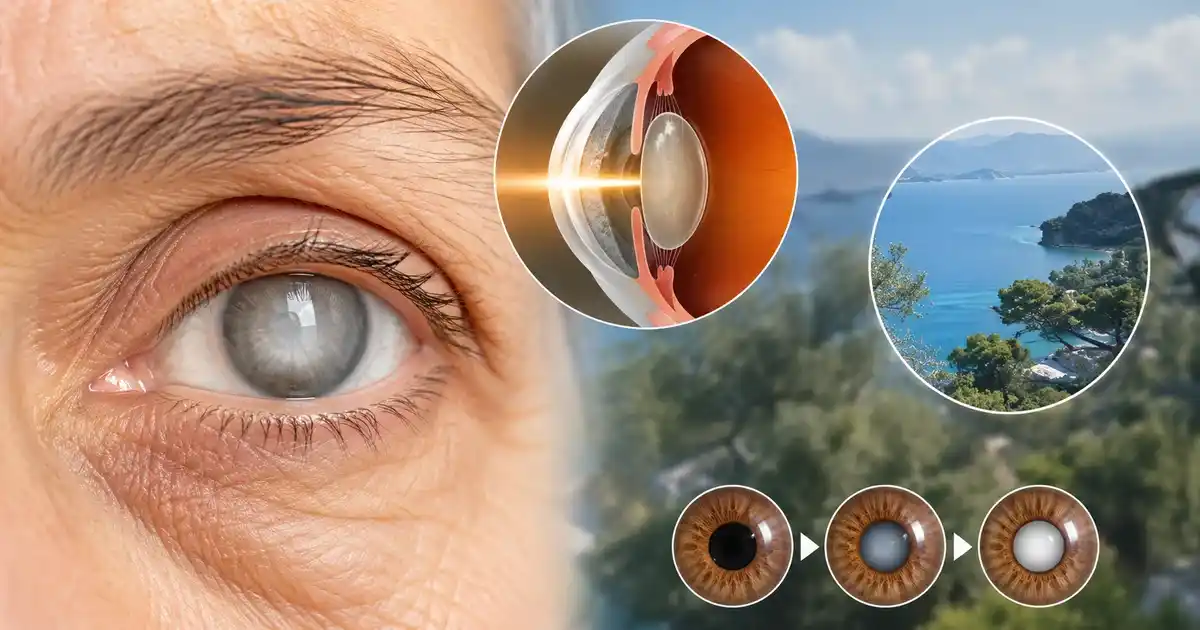
Changes in vision do not always happen suddenly. In many cases, a person gradually notices that objects are no longer as clear as they used to be, reading requires stronger lighting, night driving has become more difficult, or bright lights create uncomfortable glare. These changes may be among the early signs of cataracts in the eye, a common condition in which the natural lens gradually loses its transparency.
Cataracts can initially be mild and may not significantly interfere with daily activities. However, as lens opacity progresses, it can affect reading, driving, work, recognizing faces, and performing routine tasks comfortably and safely. Recognizing the symptoms of cataracts in the eye at an early stage therefore helps patients understand when an ophthalmic evaluation is appropriate and whether observation or treatment may be needed.
At Dr. Khalil Ibrahim Hijazi Consultant & Ophthalmic Surgeon, each case is evaluated individually through a comprehensive eye examination designed to determine the degree of lens opacity and its actual effect on vision. Cataracts do not automatically mean that surgery is immediately required, but when vision begins to interfere with daily life, a specialist assessment can help determine the most appropriate treatment pathway and timing.
Symptoms of Cataracts in the Eye and How to Detect Them Early
Symptoms of cataracts in the eye usually develop gradually and can vary depending on the location and severity of the lens opacity. Common symptoms include blurred or cloudy vision, difficulty seeing fine details, increased sensitivity to light, glare, and halos around lights, particularly at night.
Patients may also notice that colors appear less vivid or that contrast has decreased. Night driving can become more challenging because of glare from headlights and streetlights. Some people may also experience repeated changes in their eyeglass prescription without achieving the improvement in visual clarity they previously experienced.
These symptoms do not necessarily confirm the presence of cataracts because other eye conditions can produce similar visual changes. Therefore, an ophthalmic examination is important to determine the actual cause of reduced vision, assess the condition of the lens, and evaluate the overall health of the eye.
Early Symptoms of Cataracts
Early symptoms of cataracts may be so mild that patients gradually adapt to them without realizing that their vision has changed. A person may notice that images appear slightly less sharp, small print is more difficult to read, or stronger lighting is needed for close-up activities.
Other early signs may include increased glare when looking at bright lights, halos around lamps, and greater difficulty seeing clearly while driving at night. Some patients may notice frequent changes in their eyeglass prescription without obtaining the expected improvement in visual quality.
The presence of early cataract symptoms does not automatically mean that cataract surgery is necessary. When the opacity is limited and daily activities remain comfortable, regular monitoring may be appropriate. However, early detection makes it easier to monitor progression and determine when treatment may become beneficial.
Symptoms of Lens Opacity
Symptoms of lens opacity, also known as cataract symptoms, often include gradually reduced visual clarity. Patients may describe their vision as hazy, cloudy, or as though they are looking through a foggy layer.
Fine details may become harder to distinguish, colors may appear faded, and contrast may decrease, especially in low-light conditions. Increased sensitivity to bright light and uncomfortable glare around light sources are also common.
In some cases, a patient may experience double vision in one eye. This symptom should not automatically be attributed to cataracts because it can have other causes and requires an appropriate ophthalmic assessment.
The severity of lens opacity symptoms varies according to the type, location, and progression of the cataract. A clinical examination is therefore necessary before determining whether surgery is appropriate.
Can Cataracts Cause Blindness?
Many patients ask, “Can cataracts cause blindness?” when they experience progressive vision loss. Very advanced untreated cataracts can cause severe visual impairment, and in extremely advanced cases, vision may become profoundly limited.
However, cataracts are different from many other causes of permanent vision loss because the primary problem is the loss of transparency of the natural lens. For suitable patients, the cloudy lens can be removed surgically and replaced with an artificial intraocular lens.
It is generally preferable not to wait until vision becomes severely impaired. When cataracts begin to interfere with reading, work, mobility, or night driving, an ophthalmic assessment can help determine when cataract surgery may be appropriate.
Sudden loss of vision or rapidly worsening eyesight should not simply be assumed to be caused by cataracts. Such symptoms require prompt medical assessment to identify the actual cause.
Causes of Cataracts in the Eye and Risk Factors
The causes of cataracts in the eye are varied, although age-related changes in the natural lens remain among the most common factors. As the eye ages, changes can occur in the structure and proteins of the lens, gradually reducing its transparency and affecting the way light reaches the retina.
However, cataracts are not limited to older adults. They can develop earlier due to genetic factors, diabetes, previous eye injuries, certain medications, or previous eye procedures. Environmental factors and long-term exposure to ultraviolet radiation may also contribute to the risk.
Understanding the causes and risk factors of cataracts helps patients recognize the importance of regular eye examinations, especially when they belong to a higher-risk group. Routine ophthalmic monitoring can identify changes in the lens and other parts of the eye before visual impairment becomes significant.
Causes of Cataracts in the Eye
One of the main causes of cataracts in the eye is the natural aging process. Over time, proteins within the lens can undergo structural changes and become less transparent, creating cloudy areas that interfere with the passage of light.
Cataracts may also be associated with diabetes, previous eye trauma, certain eye surgeries, and prolonged use of some medications, including corticosteroids, depending on the dose, duration, and individual health circumstances.
Some people may develop cataracts at a younger age because of genetic or congenital factors. Previous trauma to the eye can also lead to traumatic cataracts, while repeated exposure to ultraviolet radiation without appropriate protection may contribute to lens changes.
For this reason, identifying the specific causes of cataracts requires consideration of the patient's medical and ophthalmic history together with a comprehensive examination.
Complications of Cataracts in the Eye
The main complications of cataracts in the eye are associated with progressive deterioration in visual quality. Patients may gradually find it more difficult to read, drive, work, or perform activities that require accurate vision.
Night vision can become particularly challenging because of glare and halos around lights. Color perception and contrast may also decline, which can make everyday activities less comfortable and potentially affect a person's independence.
In very advanced cases, the lens can become significantly opaque and harder, which may make surgical management more technically challenging in certain circumstances. For this reason, it is generally preferable to evaluate treatment options before the cataract becomes extremely advanced, especially when vision is already affecting quality of life.
People at Higher Risk of Developing Cataracts
The likelihood of developing cataracts increases with age, but other groups can also have a higher risk of developing them earlier or experiencing faster progression. These include people with diabetes and individuals who have previously experienced eye trauma or undergone certain ophthalmic procedures.
Long-term use of certain medications may also increase the risk depending on the specific drug, dose, and duration of treatment. Genetic or family-related factors can contribute to cataract development at a younger age in some patients.
People with these risk factors may benefit from regular eye examinations, particularly if they notice persistent changes in their vision. Early evaluation can help identify cataracts as well as other eye conditions that may contribute to visual impairment.
Diagnosis of Cataracts in the Eye and When Early Surgery May Be Needed
The diagnosis of cataracts in the eye focuses on determining the degree of lens opacity and assessing its effect on visual function. The presence of a cataract alone does not automatically mean surgery is required, because some patients have mild lens opacity that does not significantly interfere with their daily activities.
Another patient may experience a much greater impact from the same degree of opacity because of professional requirements, night driving, reading needs, or other daily visual demands. Therefore, the timing of treatment is individualized rather than based solely on age or cataract appearance.
A complete eye assessment is also important to determine whether the cataract is actually the main cause of reduced vision. Conditions involving the retina, optic nerve, cornea, or other structures may influence the expected visual outcome after cataract surgery.
Diagnosis of Cataracts in the Eye
Diagnosis of cataracts in the eye begins with an assessment of visual acuity and a detailed examination of the lens. Specialized ophthalmic instruments allow the doctor to identify the degree and location of lens opacity and evaluate how it may be affecting vision.
The cornea, retina, optic nerve, and other structures are also assessed to identify additional causes of visual impairment. This evaluation becomes particularly important before surgery because other eye conditions can influence the expected visual outcome.
When surgery becomes an appropriate option, precise eye measurements are performed to help determine the most suitable intraocular lens. The patient's visual needs, lifestyle, eye health, and expected outcomes are considered when developing the treatment plan.
When Do Cataracts Require Surgery?
The question “When do cataracts require surgery?” is answered primarily by considering how much the condition affects the patient's daily life. If the patient can still read, work, drive, and perform routine activities comfortably, observation may remain appropriate in some cases.
Surgery may become appropriate when blurred vision begins to interfere with everyday activities, night driving becomes difficult, or glasses no longer provide sufficient visual improvement.
Surgery may also be considered when the cataract becomes dense enough to interfere with the doctor's ability to properly assess or manage another condition inside the eye.
Therefore, there is no single visual acuity level or age that determines the need for surgery for everyone. The decision should be based on the examination, the degree of lens opacity, the patient's visual needs, and the overall condition of the eye.
Best Time to Have Cataract Surgery
There is no universal best time to have cataract surgery for every patient. Surgery is generally not necessary simply because a mild cataract has been detected if it does not significantly affect visual function.
At the same time, it is not always beneficial to wait until the cataract becomes extremely advanced. When visual impairment begins to interfere with work, reading, driving, mobility, or other important activities, treatment may become more appropriate.
At Dr. Khalil Eye Center, the timing of surgery is determined according to the patient's examination findings, degree of lens opacity, visual requirements, and overall eye health. This individualized approach helps ensure that surgery is recommended when the expected benefits are meaningful for the patient.
Symptom or Sign | Effect on Vision | When Does It Require Surgical Evaluation? |
|---|---|---|
Blurred or Cloudy Vision | Difficulty seeing details clearly | When it affects reading, work, or daily activities |
Light Sensitivity and Glare | Increased discomfort from lights and headlights | If it becomes frequent and interferes with vision |
Poor Night Vision | Difficulty seeing in low-light conditions | When it affects driving or moving around at night |
Halos Around Light Sources | Blurred or distorted vision, especially at night | If they occur frequently and affect daily activities |
Frequent Changes in Glasses Prescription | Unstable vision or only temporary improvement with glasses | When glasses no longer provide satisfactory vision |
Faded Colors | Difficulty distinguishing colors and visual details | When there is a noticeable decline in visual quality |
Double Vision in One Eye | Seeing a doubled or unclear image | When it persists and affects vision |
Overall Decline in Vision | Difficulty performing everyday tasks | When cataracts significantly affect quality of life |
Cataract Treatment and Modern Surgical Options
Cataract treatment depends on the stage of the condition and the extent to which it affects vision. During the early stages, updated glasses, improved lighting, and regular monitoring may help patients manage some visual difficulties.
These measures, however, do not remove the cloudy lens or restore its natural transparency. Once the cataract significantly affects vision and quality of life, surgical treatment becomes the primary method of removing the opaque lens and replacing it with an artificial intraocular lens.
The appropriate surgical technique and lens are selected after a comprehensive assessment. The choice may depend on the condition of the eye, the density of the cataract, measurements, visual needs, and the patient's lifestyle.
Cataract Treatment
In the early stages, cataract treatment may involve regular monitoring, updated eyeglasses, and improved lighting, especially when symptoms remain mild and daily activities are not significantly affected.
These approaches do not eliminate the cataract itself. When lens opacity becomes responsible for meaningful visual impairment, cataract treatment generally involves removing the cloudy natural lens and replacing it with an artificial intraocular lens.
The type of intraocular lens is selected according to precise eye measurements and the patient's visual requirements. Factors such as astigmatism, corneal health, retinal condition, and the desired visual range may influence the available options.
Cataract Surgery
Cataract surgery involves removing the natural lens after it has become cloudy and replacing it with a clear artificial intraocular lens. The procedure is commonly performed under local anesthesia, with a small surgical opening used to access and remove the cloudy lens before positioning the replacement lens.
Modern techniques are designed to allow cataract removal through a relatively small incision while minimizing unnecessary trauma to the surrounding tissues. The exact surgical approach depends on the density of the lens and the characteristics of each eye.
Preoperative planning is an important part of cataract surgery. Detailed examinations and measurements help the surgeon select the appropriate intraocular lens and establish realistic expectations based on the condition of the eye.
Phaco Cataract Surgery
Phaco cataract surgery is one of the modern techniques used to remove a cloudy lens. It uses ultrasound energy to break the cataract into small fragments, which are then removed through a small incision before the artificial intraocular lens is inserted.
The technique can allow cataract removal through a relatively small opening and may support a relatively rapid visual recovery in many suitable patients. However, the exact approach depends on lens density, eye anatomy, and other individual characteristics.
Phaco cataract surgery requires careful preoperative planning, including assessment of the eye, precise measurements, selection of the appropriate lens, and postoperative monitoring. The combination of these steps contributes to a treatment plan tailored to the individual patient's visual needs.
Cataract Surgery Results and Recovery Advice
The goal of cataract surgery is to remove the cloudy lens and improve visual clarity. Some patients notice an improvement in vision soon after surgery, while others need more time for the eye and vision to stabilize.
The final visual result does not depend only on cataract removal. The health of the retina, optic nerve, cornea, and other eye structures can also influence the level of vision that can be achieved. This is why a complete examination before surgery is essential for establishing realistic expectations.
Following postoperative instructions and attending scheduled follow-up examinations are equally important. Regular monitoring allows the doctor to evaluate healing and identify any unexpected changes at an early stage.
Cataract Surgery Success Rate
Cataract surgery generally has a high success rate among appropriately selected patients and can provide significant visual improvement in many cases. However, the cataract surgery success rate cannot be represented by one fixed percentage that applies equally to every patient.
Outcomes can be influenced by the health of the eye before surgery, the condition of the retina and optic nerve, coexisting eye diseases, the accuracy of preoperative measurements, the type of intraocular lens, the surgical technique, and adherence to postoperative instructions.
Successful surgery does not necessarily mean that glasses will never be needed again. Some patients may still require glasses for reading or certain distances depending on the implanted lens and their final visual result.
Instructions After Cataract Surgery
After cataract surgery, the eye needs appropriate care during the recovery period. Prescribed eye drops should be used according to the doctor's instructions, including the correct dose and schedule. Patients should not stop or modify their medication without medical guidance.
Rubbing or pressing on the eye should be avoided, and activities that could expose the eye to trauma or contamination should be limited for the period recommended by the ophthalmologist. Depending on the case, swimming, strenuous physical activity, and heavy lifting may need to be temporarily avoided.
Follow-up appointments are an essential part of recovery because they allow the doctor to monitor healing and visual progress. Severe pain, increasing redness, discharge, or a sudden decline in vision should be assessed promptly.
When Does Vision Improve After Surgery?
Vision may begin to improve within the first few days after cataract surgery, but the time needed for stable vision varies from patient to patient. Some people experience noticeable improvement quickly, while others require more time for the eye to heal and vision to stabilize.
Mild temporary symptoms such as slight blurring or light sensitivity can occur during the early recovery period and may gradually improve as healing progresses and prescribed treatment is followed.
A sudden decrease in vision after initial improvement, severe pain, marked redness, or any new concerning symptom should not be ignored. Medical evaluation can help identify the cause and ensure appropriate management.
Conclusion
Symptoms of cataracts in the eye can develop so gradually that patients may become accustomed to changes in their vision without realizing how much their daily activities have been affected. Persistent cloudiness, increasing glare, difficulty reading, or problems with night driving can all be reasons to undergo an ophthalmic assessment and determine whether lens opacity is responsible for the visual changes.
Modern cataract treatment options, including phaco cataract surgery, provide precise surgical approaches designed to remove the cloudy natural lens and replace it with an appropriate artificial lens. The expected visual outcome varies between patients according to the health of the eye, the retina and optic nerve, the condition of the lens, and individual visual needs.
At Dr. Khalil Eye Center, each treatment plan begins with careful diagnosis and assessment of the cataract, followed by evaluation of whether surgery is necessary, selection of the appropriate surgical approach and intraocular lens, and postoperative follow-up. Dr. Khalil Ibrahim Hijazi focuses on individualized treatment decisions based on the patient's actual condition rather than simply the presence of lens opacity.
When changes in vision begin to interfere with everyday activities, a specialized eye evaluation can provide a clearer understanding of the condition and help identify the most suitable path toward maintaining visual quality and comfortable daily life.
Frequently Asked Questions
Related Articles
Causes of Recurrent Eye Redness and When It May Indicate a Serious Problem
Causes of recurrent eye redness, when to seek an eye exam, and key prevention tips. Dr. Khalil explains when specialist evaluation is needed.
Chronic Dry Eye: Causes, Treatment, and the Best Ways to Prevent It
Chronic dry eye can affect comfort and visual quality. Understanding its causes, treatment options, and prevention strategies can support healthier eyes with Dr. Khalil.
Conjunctivitis: Causes, Symptoms, Prevention and Treatment
Learn with Dr. Khalil about conjunctivitis causes and symptoms, treatment options, and practical prevention measures that help protect eye health.
Glaucoma: How to Protect Your Vision from Gradual Vision Loss
Discover glaucoma with Dr. Khalil Hijazi and learn how early detection, regular monitoring, and appropriate treatment can help protect your vision from gradual loss.