The Difference Between Myopia and Hyperopia and How to Choose the Right Treatment
Discover with Dr. Khalil Hijazi the difference between myopia and hyperopia, their correction options, and the factors that determine the right treatment.
Myopia and hyperopia are among the most common refractive errors, but patients may sometimes confuse the two because both can cause blurred vision, eye strain, and headaches. Understanding the difference between myopia and hyperopia is important because each condition affects vision differently.
Myopia usually makes distant objects appear less clear, while near objects may remain relatively clear. Hyperopia, on the other hand, can make near focusing more difficult, especially when the refractive error is significant or the eye's focusing ability decreases with age.
At Dr. Khalil Ibrahim Hijazi Consultant & Ophthalmic Surgeon, patients can receive a comprehensive assessment to identify the type and degree of refractive error and determine suitable correction options. The goal is to combine visual quality, eye health, and realistic expectations when selecting treatment.
Difference Between Myopia and Hyperopia and Their Causes
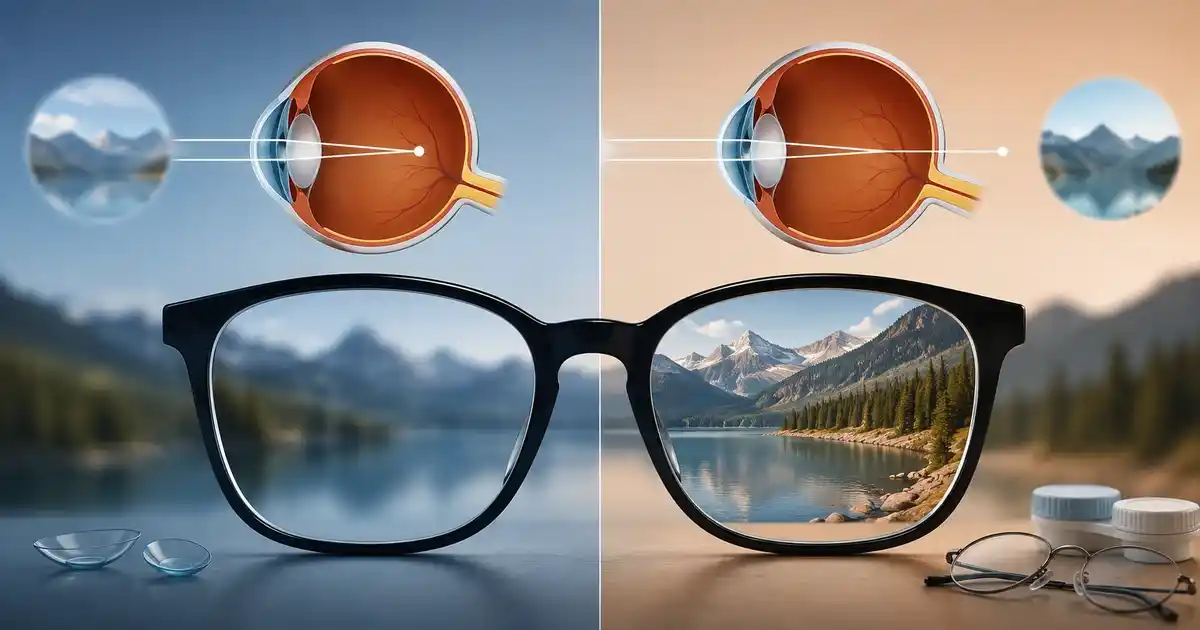
To understand the difference between myopia and hyperopia, it is useful to understand how the eye focuses light. In normal vision, light is focused appropriately on the retina. When this process is altered, a refractive error can develop.
Myopia and hyperopia differ in how light is focused and which viewing distances are affected most. A proper eye examination is therefore essential before choosing any form of correction.
What Is Myopia and What Are Its Main Symptoms?
Myopia is a refractive error that usually makes distant objects appear blurred while near vision remains relatively clearer. It occurs when the eye's optical system focuses light in front of the retina instead of directly on it.
Symptoms of myopia vary according to severity and age. Patients may have difficulty seeing distant signs, classroom boards, faces, or other details clearly.
Other symptoms of myopia may include eye strain, headaches, and squinting to improve clarity. Children may struggle to see the classroom board or may move closer to screens to see details.
What Is Hyperopia and How Does It Affect Vision?
Hyperopia is a refractive error in which the eye does not focus incoming light in the ideal position on the retina. It can make near vision more difficult, particularly when the degree of hyperopia is significant.
People with mild hyperopia may compensate through the eye's natural focusing mechanism, so symptoms may not always be obvious at first.
With increased visual demand, symptoms of hyperopia may include eye strain, headaches, difficulty reading for extended periods, blurred near vision, or discomfort during prolonged screen use.
Causes of Myopia and Hyperopia
The causes of myopia and hyperopia vary between individuals and may involve eye shape, genetic factors, and environmental influences.
Factors associated with myopia may include family history and certain patterns of prolonged near work, particularly during childhood and adolescence.
Hyperopia can be related to the length and shape of the eye and may be present from childhood at varying degrees. Therefore, the causes of myopia and hyperopia are not identical, and treatment should be based on individual assessment.
Difference Between Myopia and Hyperopia Symptoms and Their Daily Impact
The difference between myopia and hyperopia symptoms becomes clearer when considering the viewing distance that causes difficulty. Myopia commonly affects distant vision, while hyperopia may create greater difficulty with near focusing.
However, symptoms can overlap with general eye strain and other visual problems. Therefore, symptoms alone should not be used to determine the type of refractive error.
Symptoms of Myopia in Children and Adults
Symptoms of myopia in children and adults may include blurred distance vision, difficulty reading distant signs, and a tendency to move closer to objects.
Children may not complain directly about poor vision. Parents may instead notice behaviors such as sitting close to the television, moving closer to books, squinting, or difficulty seeing the classroom board.
Myopia may also cause headaches or eye strain, particularly when the person repeatedly tries to focus on distant details. A proper examination is recommended when symptoms persist.
Symptoms of Hyperopia and Near Vision Problems
Symptoms of hyperopia often become noticeable when focusing on nearby objects. Patients may experience eye strain or headaches after reading, computer work, or prolonged smartphone use.
Some people can compensate for hyperopia through increased focusing effort, particularly when the condition is mild. However, this ability may become less effective over time.
Patients may therefore notice difficulty reading, reduced comfort during near work, or a need for frequent breaks. An eye examination can determine whether hyperopia is responsible for the symptoms.
Comparison | Myopia | Hyperopia |
|---|---|---|
Where Light Focuses | In front of the retina | Behind the retina |
Vision Most Affected | Distance vision | Near vision, although distance vision may also be affected |
Common Symptoms | Blurred distance vision and eye strain | Difficulty focusing on near objects, eye strain, and headaches |
Eyeglass Correction | Minus (concave) lenses | Plus (convex) lenses |
Contact Lenses | Can be used to correct myopia depending on the case | Can be used to correct hyperopia depending on the case |
Laser Vision Correction | May be suitable for some patients after evaluation of the eyes and cornea | May be suitable for some patients after a comprehensive assessment |
Treatment Selection | Depends on the degree of myopia, age, eye health, and prescription stability | Depends on the degree of hyperopia, age, eye health, and prescription stability |
Difference Between Poor Vision and Myopia
The difference between poor vision and myopia is important because poor vision is a general description of reduced visual quality, while myopia is a specific refractive error.
A person with poor vision may have myopia, hyperopia, astigmatism, or another eye condition. These terms should therefore not be treated as interchangeable.
A comprehensive examination helps identify the underlying cause and determine whether myopia correction, hyperopia correction, or another approach is appropriate.
Treatment Options for Myopia and Hyperopia and Vision Correction
Treatment for myopia and hyperopia depends on refractive error, age, eye health, lifestyle, and visual needs. Glasses and contact lenses are suitable for many patients, while selected individuals may be evaluated for refractive procedures.
There is no single treatment that is best for everyone. The goal is to choose an appropriate and safe correction based on the condition of the eye.
Treating Myopia with Glasses and Contact Lenses
Myopia treatment with glasses is one of the most common approaches to correcting distance vision. Appropriate lenses redirect light so that images can be focused more effectively on the retina.
Contact lenses may also be suitable for selected patients after assessing eye health, comfort, and the ability to follow appropriate hygiene and wearing practices.
Glasses or contact lenses can be effective options for children, teenagers, and adults, particularly when surgery is unnecessary or not preferred.
Treating Hyperopia and Vision Correction Options
Hyperopia treatment aims to improve the eye's ability to focus clearly. Glasses or contact lenses may be used depending on the degree of refractive error and the patient's age and visual requirements.
Glasses can provide practical and effective correction, particularly when near-work symptoms are present. Other correction options may be assessed in selected cases.
Hyperopia correction requires accurate refraction and eye examination because the appropriate correction can differ significantly between patients with similar symptoms.
Myopia Surgery and Hyperopia Surgery
Some patients may be evaluated for refractive procedures designed to alter the corneal shape and improve the way light is focused on the retina. Certain techniques may be considered for myopia, while selected hyperopia cases may also be evaluated.
Myopia surgery and hyperopia surgery are not appropriate for everyone. Before considering surgery, the ophthalmologist should assess corneal thickness and shape, ocular surface health, refractive stability, and overall eye health.
The decision should therefore be based on medical suitability rather than simply the desire to reduce dependence on glasses.
How to Choose the Right Treatment for Myopia and Hyperopia
Choosing the right treatment starts with understanding the eye's condition, the degree of refractive error, and the patient's visual needs. Glasses may be the most suitable choice for one person, while another may be a candidate for refractive surgery.
The aim is to achieve an appropriate balance between visual quality, safety, and daily comfort.
Best Treatment for Myopia and Hyperopia According to the Condition
The best treatment for myopia and hyperopia cannot be determined without a comprehensive eye examination. Refractive power is only one factor; corneal health, ocular surface condition, age, refractive stability, and lifestyle are also important.
Glasses or contact lenses may provide sufficient correction, while selected patients can discuss refractive surgery after appropriate evaluation.
Therefore, the best treatment for myopia and hyperopia is the option that suits the patient's eye health, provides appropriate correction, and supports realistic expectations.
Tests Needed Before Vision Correction
Before choosing myopia correction or hyperopia correction, the ophthalmologist may perform several tests to assess the eye comprehensively. These can include:
Accurate visual acuity and refraction measurements.
Corneal assessment, including shape and thickness when surgery is considered.
Evaluation of the ocular surface and dry eye when appropriate.
Assessment of the internal eye and retina.
Review of refractive stability and medical and eye history.
These tests help determine whether surgical correction is appropriate or whether glasses or contact lenses remain the better option.
Factors That Determine the Appropriate Treatment Method
The appropriate treatment depends on several factors, including the degree of myopia or hyperopia, age, refractive stability, corneal health, and the presence of dry eye or other ocular conditions.
Daily activities and occupational requirements can also influence the choice. Some patients prefer glasses, while others may seek alternatives that reduce their dependence on them.
At Dr. Khalil Eye Center, these factors can be evaluated individually to identify the most suitable approach rather than applying the same treatment to every patient.
Preventing Vision Problems from Progressing and Improving Eye Health
Not every case of myopia or hyperopia can be prevented, particularly when genetics and eye structure play a role. However, healthy visual habits can support eye comfort and overall visual health.
Regular examinations are also important for detecting changes in refractive error or identifying other eye problems, especially in children and individuals with risk factors.
Ways to Maintain Healthy Vision
Healthy daily habits can support visual comfort. Patients can organize periods of near work, maintain suitable lighting, and keep a comfortable viewing distance when using digital devices.
Adequate sleep, avoiding unnecessary eye rubbing, and following proper contact lens care are also useful.
Healthy habits do not replace professional assessment when new visual symptoms or changes develop.
Importance of Regular Eye Examinations
Regular eye examinations help monitor myopia and hyperopia and determine whether the refractive prescription remains stable or changes over time. Follow-up is particularly important for children and teenagers because vision can change during development.
Eye examinations can also detect problems unrelated to refractive error. Therefore, an eye check should not be limited to updating a glasses prescription.
Regular monitoring allows the ophthalmologist to adjust correction, recommend further tests, or evaluate other options when appropriate.
Tips to Reduce Eye Strain
Eye strain can be reduced by taking regular breaks during reading and screen use, maintaining appropriate lighting, and keeping a comfortable distance from digital screens.
Frequent blinking during prolonged screen use can also support ocular comfort, especially when symptoms of dryness occur.
Persistent headaches, blurred vision, or focusing difficulties should be evaluated rather than automatically attributed to eye strain.
Conclusion
Understanding the difference between myopia and hyperopia helps patients approach vision problems more accurately. Each condition differs in its visual effects, symptoms, and correction options. Some people experience greater difficulty with distance vision, while others struggle primarily with near focusing.
Choosing the right treatment begins with an accurate examination of refractive error, corneal health, and overall eye condition. Myopia treatment or hyperopia treatment with glasses and contact lenses may be suitable, while selected patients may be evaluated for refractive procedures.
At Dr. Khalil Ibrahim Hijazi Consultant & Ophthalmic Surgeon, each patient is assessed individually, with attention to eye safety, visual quality, and realistic expectations.
With Dr. Khalil Hijazi, understanding the underlying vision problem can be an important step toward identifying an appropriate correction strategy and maintaining comfortable, clear vision.
Frequently Asked Questions
Related Articles
Astigmatism: Causes, Symptoms, and the Best Vision Correction Options
Astigmatism can cause blurred vision, eye strain, and headaches. Dr. Khalil explains its causes, severity, diagnosis, and suitable vision correction options.
Contact Lenses or Prescription Glasses: Which Is Better for Daily Life?
Explore contact lenses and prescription glasses with Dr. Khalil to understand their differences and choose the option that best suits your daily visual needs.
Retinal Tear: How Is It Diagnosed and Treated Before Vision Loss?
A retinal tear may cause sudden floaters or flashes and requires timely diagnosis and appropriate treatment before it progresses to retinal detachment and vision loss.
Treatment of Strabismus in Children: Nonsurgical and Surgical Options
This article explains Treatment of Strabismus in Children: Nonsurgical and Surgical Options, including its causes, symptoms, diagnosis, glasses, exercises, patching, surgery, and follow-up.