How to Prepare for LASIK and Follow Post-Surgery Instructions
Learn with Dr. Khalil about LASIK preparation, essential examinations, postoperative eye care, recovery, and the safe return to daily activities.
LASIK is a widely used procedure for correcting refractive errors and reducing dependence on glasses or contact lenses. However, successful treatment involves more than the procedure itself. Proper preparation before surgery and careful eye care afterward are important parts of the overall treatment journey. Suitability for LASIK depends on factors such as refractive stability, corneal health, tear-film condition, age, and general eye health. A detailed evaluation is therefore performed before surgery to determine whether the procedure is appropriate and which approach best fits the individual eye. After surgery, following the recommended instructions helps protect the eye and supports gradual visual stabilization. At Dr. Khalil Ibrahim Hijazi Consultant & Ophthalmic Surgeon, each patient undergoes an individualized assessment before vision correction, followed by guidance tailored to the condition of the eyes. This guide explains preparation, essential examinations, recovery, restrictions, and return to daily activities.
Preparing for LASIK and Essential Examinations
Preparation begins by determining whether LASIK is appropriate for the individual eye rather than simply considering the glasses prescription. Corneal health, refractive stability, tear-film condition, and the absence of relevant eye problems are all important factors.
A comprehensive assessment can identify conditions that should be addressed before surgery and helps the ophthalmologist determine the most appropriate correction approach.
Preparing for LASIK
Preparing for LASIK involves several steps designed to obtain accurate measurements and optimize the eye before surgery.
Important considerations include:
Informing the ophthalmologist about medical conditions and medications.
Following instructions regarding discontinuation of contact lenses.
Avoiding eye makeup before the procedure according to medical instructions.
Reporting dryness, irritation, infection, or allergy symptoms.
Arranging safe transportation home after surgery, as vision may be temporarily unstable.
Examinations Before LASIK
Examinations before LASIK help assess the health of the eye and determine whether laser vision correction is appropriate. Depending on the case, evaluation may include refractive measurements, corneal mapping, corneal thickness assessment, tear-film evaluation, and other tests.
The goals may include:
Measuring myopia, hyperopia, and astigmatism accurately.
Assessing corneal shape and regularity.
Measuring corneal thickness.
Evaluating the ocular surface and dryness.
Identifying factors that may increase procedural risks.
These examinations are an essential part of deciding whether LASIK is suitable.
LASIK Requirements
LASIK requirements vary according to the procedure and individual eye characteristics. Stable refractive measurements, healthy corneal tissue, and an appropriate ocular surface are among the factors considered.
Age, general health, and lifestyle may also influence the choice of vision correction. Some patients may be better suited to another corrective option.
A glasses prescription alone cannot determine eligibility because corneal health and other ocular factors may be more important.
Instructions Before LASIK for Optimal Results
Following instructions before LASIK helps obtain reliable measurements and prepares the eye for surgery. Specific requirements may differ depending on contact lens type, ocular condition, and the chosen procedure.
Understanding these instructions in advance can also reduce anxiety and help the patient arrive prepared.
Instructions Before LASIK
Instructions before LASIK may include:
Discontinuing contact lenses for the period recommended by the ophthalmologist.
Avoiding eye makeup before surgery according to instructions.
Keeping the eyelids and surrounding area clean.
Using prescribed preoperative drops when instructed.
Reporting new redness, irritation, discharge, or infection before surgery.
Getting adequate rest before the procedure.
New eye products or drops should not be introduced without confirming that they are appropriate.
LASIK Preparation
LASIK preparation includes both medical and practical planning. Comfortable clothing and avoiding potentially irritating products around the eyes may be helpful. Transportation home should also be arranged.
Patients should understand their postoperative drops, follow-up schedule, and temporary activity restrictions.
The ophthalmologist may also explain expected early symptoms such as dryness, light sensitivity, or fluctuating vision. Understanding these possibilities helps distinguish expected recovery symptoms from signs requiring medical review.
Tips Before Vision Correction Surgery
Useful tips include:
Follow contact lens instructions precisely.
Avoid eye cosmetics during the recommended period.
Report any new eye problem.
Keep postoperative instructions accessible at home.
Avoid planning demanding physical or visual activities immediately after surgery.
The most important step is completing the eye evaluation before deciding on surgery.
Post-LASIK Instructions and Eye Care
The eye requires special care during the early recovery period. Patients may experience varying degrees of dryness, mild burning, irritation, or light sensitivity during the first hours or days.
Following post-LASIK instructions helps reduce irritation and supports gradual visual stabilization.
Instructions After LASIK
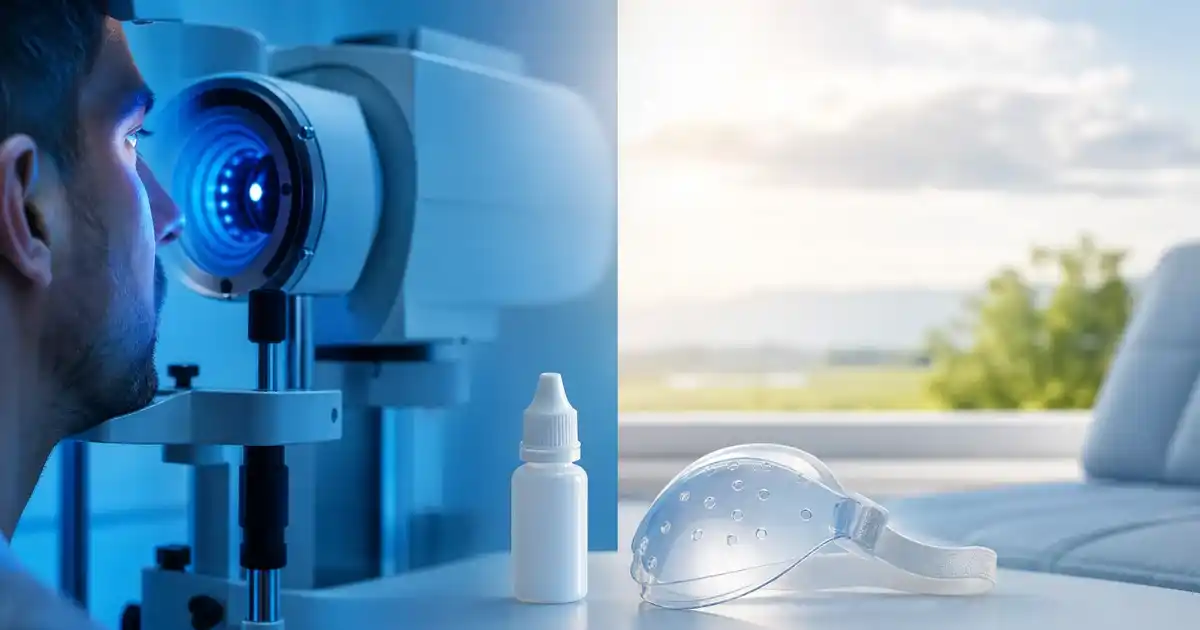
Post-LASIK instructions generally include using prescribed drops, attending follow-up visits, and avoiding eye rubbing. The ophthalmologist may recommend protective eye shields during sleep for a specific period.
Patients should also follow instructions regarding water exposure, face washing, and showering during the early recovery period.
Medication should not be stopped or changed independently, even when symptoms improve.
Tips After LASIK
Helpful tips after LASIK include:
Using prescribed eye drops as directed.
Avoiding eye rubbing.
Wearing sunglasses in bright light when recommended.
Taking appropriate visual rest.
Avoiding dusty or smoky environments.
Attending scheduled follow-up appointments.
Return to swimming, sports, work, and other activities varies according to recovery and the specific procedure, so the ophthalmologist’s instructions should take priority.
Eye Care After LASIK
Eye care after LASIK focuses on protecting the ocular surface, preventing rubbing, controlling dryness, and maintaining appropriate hygiene. Artificial tears or other medications may be recommended according to individual needs.
Comfort and visual clarity can vary during early recovery. Mild dryness or temporary visual fluctuations do not necessarily indicate a complication, but persistent or worsening symptoms should be evaluated.
LASIK Recovery and When Vision Improves
Recovery varies among patients. Some experience noticeable visual improvement early, while others need more time for vision to stabilize. Temporary fluctuations may occur during the first days or weeks.
Recovery should therefore be judged by the overall trend toward stable vision rather than by the appearance of vision on a single postoperative day.
LASIK Recovery
LASIK recovery is generally gradual. Early symptoms may include dryness, mild burning, a foreign-body sensation, or light sensitivity.
During this period, patients should:
Follow prescribed medication instructions.
Avoid rubbing the eyes.
Protect the eyes from irritants.
Attend follow-up appointments.
Delay activities involving eye impact until medically cleared.
Recovery differs between individuals, so comparing progress with another patient may be misleading.
LASIK Recovery Time
LASIK recovery time depends on the procedure, ocular health, and individual response. Some patients return to light daily activities relatively quickly, while dryness or fluctuating vision may take longer to settle.
Recovery may be influenced by:
Ocular surface health before surgery.
Refractive error.
Adherence to postoperative care.
Pre-existing dryness or allergy.
Individual healing response.
A single fixed recovery period therefore cannot apply to everyone.
When Does Vision Improve After LASIK?
Vision may begin improving relatively soon after LASIK, but clarity can fluctuate before becoming more stable.
Temporary fluctuations may be more noticeable with dry eyes or prolonged visual concentration. Follow-up examinations help confirm that recovery is progressing appropriately.
A sudden or significant decrease in vision or unusual symptoms should prompt medical evaluation rather than waiting for spontaneous improvement.
Restrictions After LASIK and Returning to Daily Activities
Restrictions after LASIK are primarily intended to protect the eye from rubbing, infection, and irritation during early recovery. The duration of each restriction varies, with some activities returning relatively quickly and others requiring a longer delay.
The ophthalmologist’s specific instructions should therefore take priority over generalized timelines.
Restrictions After LASIK
Common restrictions during early recovery may include:
Rubbing or pressing the eyes.
Using eye makeup before medical clearance.
Swimming or exposure to potentially contaminated water during the recommended period.
Contact sports before medical clearance.
Exposure to heavy dust or smoke whenever possible.
Using non-prescribed eye drops without medical advice.
The goal is not to stop all daily activities, but to protect the eyes from factors that may interfere with recovery.
Sleeping After LASIK
Sleeping after LASIK requires special attention during the early days because accidental eye rubbing can occur during sleep. Protective eye shields may be recommended for a specific period.
Patients should avoid sleeping positions that may put pressure on the eyes and should follow instructions concerning protective shields and prescribed medication.
Adequate sleep can support general comfort during recovery, but it does not replace proper postoperative eye care.
Using a Mobile Phone After LASIK
Using a mobile phone after LASIK may initially feel uncomfortable because of dryness, light sensitivity, or visual fatigue. Screen use should therefore be reduced initially, with regular breaks.
Helpful measures include:
Adjusting screen brightness for comfort.
Maintaining an appropriate viewing distance.
Taking frequent breaks.
Avoiding prolonged uninterrupted screen use.
Using lubricating drops when prescribed.
There is no single screen-time limit for every patient; return to normal use depends on comfort and visual stability.
When Can You Drive After LASIK?
Driving after LASIK depends on visual clarity and individual recovery. Driving should be avoided until vision is sufficiently clear and stable for safe driving and the ophthalmologist considers it appropriate.
Some patients may resume driving relatively soon, while others need more time. Blurred vision, significant light sensitivity, or any symptom that interferes with safe driving should be treated as a reason to delay driving.
Conclusion
A successful LASIK journey begins with careful preoperative assessment and continues with appropriate postoperative care. Preoperative examinations help determine suitability and evaluate corneal and ocular-surface characteristics, while proper aftercare supports visual stabilization and reduces unnecessary irritation. Understanding restrictions, sleep precautions, screen use, and driving requirements also makes the early recovery period more organized and comfortable. At Dr. Khalil Ibrahim Hijazi, vision correction is approached on an individual basis, with attention to both preoperative preparation and postoperative follow-up. Since recovery differs from one patient to another, following personalized medical instructions remains the most important part of supporting a smooth recovery and stable visual outcome.
Frequently Asked Questions
Related Articles
Femto LASIK Vision Correction: Benefits and Procedure Steps
Femto LASIK Vision Correction: Benefits and Procedure Steps explains candidacy, benefits, treatment stages and recovery with Dr. Khalil Ibrahim Hijazi.
Smart Lens Implantation or LASIK: Which Is More Suitable for Your Case?
Discover with Dr. Khalil Hijazi how smart lens implantation and LASIK differ, and how precise eye assessment helps identify the right vision correction option.
Laser Vision Correction in Istanbul: Who Is Suitable and What Results Can Be Expected?
Discover with Dr. Khalil Hijazi the available laser vision correction in Istanbul, who may benefit from them, and how accurate testing supports the right technique and realistic visual expectations.
Retinal Tear: How Is It Diagnosed and Treated Before Vision Loss?
A retinal tear may cause sudden floaters or flashes and requires timely diagnosis and appropriate treatment before it progresses to retinal detachment and vision loss.