Routine Eye Examinations for Children and Their Importance for Healthy Visual Development
Routine Eye Examinations for Children and Their Importance for Healthy Visual Development help detect vision problems early and support normal visual growth with specialized care from Dr. Khalil.
A child’s visual system continues to develop from infancy through the school years, and some eye or vision problems may develop without obvious symptoms that a young child can describe. For this reason, Routine Eye Examinations for Children and Their Importance for Healthy Visual Development are an important part of pediatric care. Eye examinations can identify refractive errors, strabismus, amblyopia, and certain congenital or acquired eye conditions before they have a prolonged effect on visual development. A pediatric eye assessment also involves more than simply asking a child to read an eye chart. Eye alignment, movement, focusing ability, visual behavior, and the health of different eye structures may all need evaluation. At Dr. Khalil Center, Dr. Khalil Ibrahim Hijazi Consultant & Ophthalmic Surgeon assesses children according to their age, symptoms, family history, and individual risk factors to determine the most appropriate form of follow-up.
The Importance of Children's Vision Examinations During Growth
Vision develops gradually as the eyes and brain learn to work together. A problem affecting one or both eyes during this period may interfere with that process even when a child appears to function normally. Regular examinations allow changes in vision to be identified and compared over time, especially in children who have a family history of eye disorders or other factors that may increase their risk.
Children's Vision Examination
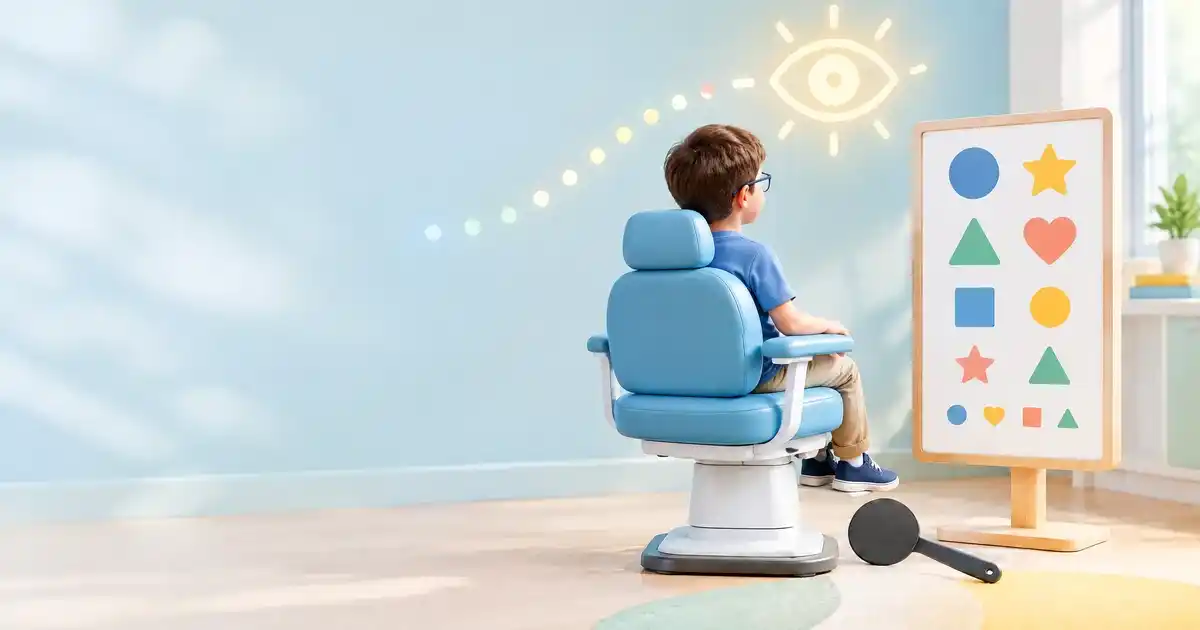
A children's vision examination changes according to the child's age and ability to cooperate. In infants and toddlers, the doctor may evaluate fixation, tracking, response to light, and whether the eyes move together normally. Older children may be tested with pictures, symbols, or standard visual acuity charts.
The assessment may also include refraction to identify myopia, hyperopia, or astigmatism, as well as tests of eye alignment and movement. This is important because children may adapt to blurred vision and may not realize that their vision differs from what is expected.
Importance of Vision Examination for Children
The importance of vision examination for children is closely related to early recognition of conditions that can interfere with visual development. One example is amblyopia, in which the brain does not develop normal visual function from one eye, or sometimes both eyes, because the visual input is reduced or unbalanced during childhood.
Parents who want to understand this condition in more detail can read Amblyopia in Children: Causes, Treatment, and the Importance of Early Diagnosis, especially when there is a significant difference in refractive error, eye misalignment, or another factor that may reduce the use of one eye.
Children's Eye Health
Children's eye health includes more than seeing small letters clearly. It also involves focusing, eye movement, binocular vision, alignment, and the ability to shift attention between near and distant objects.
Regular eye assessments help monitor these visual functions throughout growth. They also provide an opportunity to discuss visual habits, including reading distance, lighting, screen use, and time spent outdoors, all of which can influence comfort and visual behavior.
When Should a Child's Vision Be Examined?
The timing of an examination depends on age, medical history, family history, symptoms, and risk factors. Some children need specialized assessment earlier or more frequently than others, particularly when parents notice abnormal eye appearance, unusual visual behavior, or changes in school performance.
When Should a Child's Vision Be Examined
Parents often ask when should a child's vision be examined. Visual responses can be observed from infancy, while more detailed examinations become possible as the child grows.
Specialized evaluation becomes more important when there is persistent eye misalignment, poor tracking, an abnormal pupil appearance, significant light sensitivity, or a clear difference in the way the two eyes function. In these situations, waiting for the next routine check may not be appropriate.
Child's Vision Examination
A child's vision examination is tailored to the child's developmental level. It may include separate visual acuity testing for each eye, refraction, eye alignment assessment, eye movement testing, and examination of the internal and external structures of the eye.
Parents should also mention headaches, reading difficulties, unusual viewing distances, or a family history of strabismus, amblyopia, high refractive errors, or childhood eye disease.
Early Vision Examination for Children
An early vision examination for children can identify problems before they affect visual development for an extended period. Young children may be unable to explain blur, double vision, or a difference between their two eyes, which makes observation and objective testing especially useful.
Eye misalignment is one finding that deserves attention. More information is available in Signs of Strabismus in Children and When to See an Ophthalmologist, particularly when one eye turns inward, outward, upward, or downward repeatedly or continuously.
The Most Important Eye Examinations for Children
Eye examinations are selected according to the child's age, symptoms, and initial findings. A combination of behavioral and objective tests can provide useful information even when the child cannot communicate clearly.
Examination | What It Evaluates | Why It Matters |
|---|---|---|
Visual acuity | Clarity of vision in each eye | Detects reduced vision and differences between the eyes |
Refraction | Myopia, hyperopia, astigmatism | Identifies the need for optical correction |
Eye alignment | Strabismus and binocular coordination | Detects problems in how the eyes work together |
Eye movement | Tracking and movement control | Evaluates ocular motility |
Eye health examination | Cornea, lens, retina, optic nerve | Identifies structural or medical eye problems |
Eye Examination for Children
An eye examination for children can include assessment of both the external and internal eye structures. Depending on the child's age and the purpose of the visit, specialized instruments may be used to examine the cornea, lens, optic nerve, retina, and other structures.
This makes the examination broader than a simple vision test because it can identify ocular conditions that require monitoring even when visual acuity appears satisfactory.
Eye Tests for Children
Eye tests for children may also evaluate eye alignment and binocular vision. Cover testing, in which each eye is covered separately while the child looks at a target, can help reveal forms of strabismus that are not always visible.
Pupil responses and eye movements may also be assessed when there are symptoms such as double vision or an unusual head posture.
Children's Eye Examinations
Not every test is required at every visit. Children's eye examinations are individualized according to age, symptoms, cooperation, and previous findings.
In some cases, eye drops may be used to temporarily relax the focusing system. This allows a more accurate measurement of refractive error, particularly in younger children who can otherwise compensate for some degrees of hyperopia through strong focusing.
Newborn Vision Examination
A newborn vision examination is different from the tests used for older children. Early assessment focuses on the general appearance of the eyes, response to light, and whether the optical pathway appears clear.
Persistent tearing is one symptom that may occur in infancy. Parents can read Persistent Tearing in Children: Causes and When Medical Care Is Needed to understand why ongoing tearing can result from several causes and when further ophthalmic assessment may be appropriate.
Signs of Poor Vision and Eye Problems in Children
Eye problems may be obvious in some children, but in others they appear through behavior, school performance, or unusual ways of looking at objects. Recognizing recurring signs can help parents arrange an eye assessment when needed.
Signs of Poor Vision in Children
Common signs of poor vision in children include sitting very close to screens, holding books close to the face, squinting, covering one eye, tilting the head, frequent eye rubbing, headaches, and eye fatigue.
Children may also struggle to see the board at school or lose their place while reading. These signs do not always indicate a serious disorder, but persistent symptoms deserve evaluation.
Vision Problems in Children
Common vision problems in children include myopia, hyperopia, astigmatism, strabismus, and amblyopia. More than one problem can occur at the same time, which is why symptoms alone cannot determine the exact diagnosis.
Vision may also change as a child grows, making follow-up particularly useful for children who already wear glasses or have a tendency toward changing refractive error.
Poor Vision in Children
Poor vision in children can affect reading, writing, sports, classroom participation, and visual comfort. A child may consider blurred vision normal because they have never experienced clearer sight.
Testing each eye separately is therefore important, as a child with good vision in one eye may appear to function normally while the other eye has significantly reduced visual acuity.
Children's Vision Examination at School Age
Visual demands increase once children start school. They frequently shift focus between the board, books, notebooks, and digital devices while maintaining attention for longer periods. This can make previously unnoticed vision problems more apparent.
Vision Examination at School Age
A vision examination at school age evaluates how clearly the child sees at different distances and how effectively the eyes work together during near and distance tasks.
It is particularly relevant when the child has difficulty seeing the board, experiences headaches during homework, or finds reading unusually tiring. Not every learning difficulty is caused by vision, but visual causes should be considered when compatible symptoms are present.
Routine Eye Examination for Children
The value of a routine eye examination for children lies in observing changes over time rather than relying on a single assessment performed years earlier.
Myopia may develop or progress during school years, prescriptions may need adjustment, and new symptoms may appear as visual demands increase. The interval between examinations should therefore be based on the child's findings, age, risk factors, and treatment needs.
Importance of Regular Eye Examinations
Regular examinations create a record of the child's visual development and make it easier to recognize meaningful changes. They also allow the doctor to review spectacle use, assess the response to any existing treatment, and discuss habits that may affect visual comfort.
This approach makes eye care part of the child's ongoing health monitoring rather than something considered only after noticeable vision loss appears.
Conclusion
Routine Eye Examinations for Children and Their Importance for Healthy Visual Development provide an opportunity to monitor the developing visual system and identify conditions that a child may not be able to describe. The type and frequency of testing varies with age, symptoms, and risk factors, but timely evaluation becomes particularly important when unusual eye movements, poor visual behavior, or changes in school performance are present.
At Dr. Khalil Center, Dr. Khalil Ibrahim Hijazi Consultant & Ophthalmic Surgeon provides age-appropriate eye assessments that may include visual acuity, refraction, alignment, eye movement, and examination of ocular structures. Careful follow-up throughout childhood helps parents understand how their child's vision is developing and supports comfortable visual function during learning, play, and everyday activities.
Frequently Asked Questions
Related Articles
Persistent Tearing in Children: Causes and When Medical Care Is Needed
Persistent tearing in children may be caused by allergies, blocked tear ducts, inflammation, or eye surface problems. Early evaluation helps identify the cause and choose appropriate treatment.
Amblyopia in Children: Causes, Treatment, and the Importance of Early Diagnosis
Learn with Dr. Khalil Hijazi how amblyopia in children develops and why early diagnosis and appropriate treatment can help protect healthy visual development.
Signs of Strabismus in Children and When to See an Ophthalmologist
Discover with Dr. Khalil Hijazi the signs, causes, and treatment options for childhood strabismus and the importance of early diagnosis for healthy visual development.
When Do You Need a Comprehensive Eye Exam Without Symptoms?
Protect your vision with Dr. Khalil! Learn when you need a comprehensive eye exam without symptoms and how early detection can help preserve healthy vision.