Signs of Strabismus in Children and When to See an Ophthalmologist
Discover with Dr. Khalil Hijazi the signs, causes, and treatment options for childhood strabismus and the importance of early diagnosis for healthy visual development.
Strabismus in children is a condition that deserves early attention because misalignment of one or both eyes may sometimes be temporary during early development, while in other cases it can indicate a visual problem that requires specialist assessment. Early detection is particularly important during childhood, when the visual system is still developing.
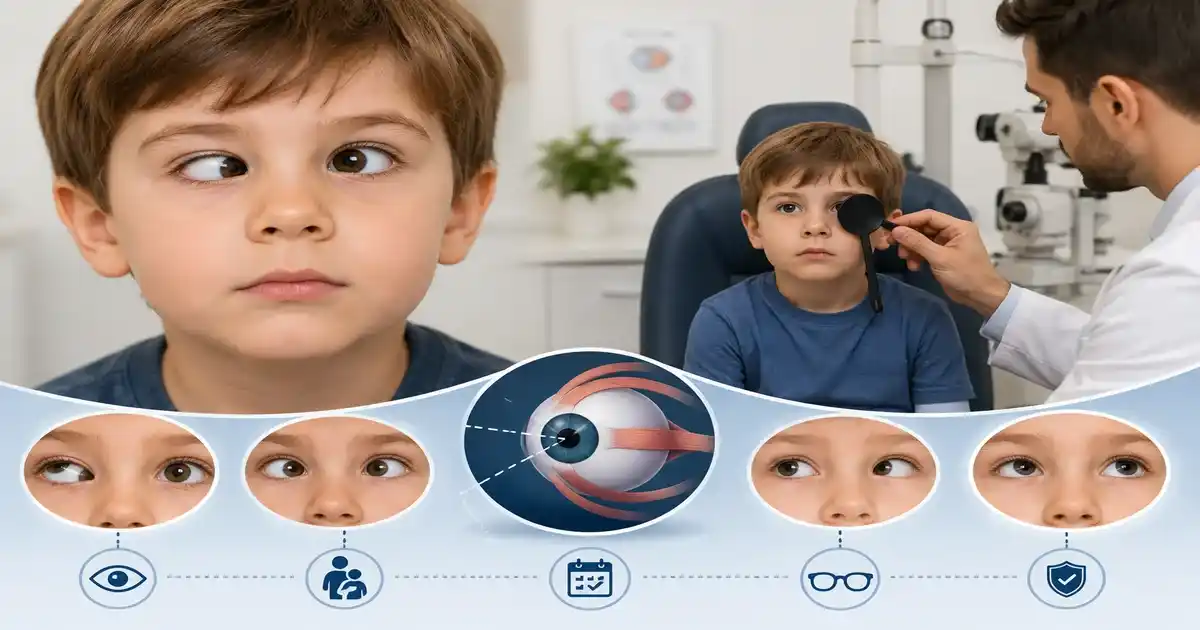
Parents may notice that one eye turns inward, outward, upward, or downward, or that a child tilts the head, closes one eye in bright light, or struggles to focus on objects. The causes and severity of strabismus vary from one child to another, so home observation alone cannot determine whether treatment is necessary.
At Dr. Khalil Ibrahim Hijazi Consultant & Ophthalmic Surgeon, childhood strabismus is assessed through a comprehensive examination designed to identify the cause, type, and effect of the misalignment on vision. The appropriate treatment plan is then selected according to the child's age and individual condition, with the aim of supporting healthy visual development.
Signs of Strabismus in Children and How to Recognize Them Early
Signs of strabismus in children can be constant or intermittent. They may become more noticeable when the child is tired, unwell, or concentrating for a long time. Parents may observe that the eyes do not move together or that one eye turns when focusing on nearby or distant objects.
The symptoms vary according to the child's age, type of strabismus, and degree of misalignment. Mild or intermittent cases may be difficult to notice, while functional signs such as difficulty judging distances or closing one eye may provide additional clues.
Any persistent or recurrent change in eye alignment should be evaluated by an eye specialist, even if the child does not complain of pain or appear to have an obvious visual problem.
Signs of Strabismus in Children
Signs of strabismus in children may include:
• One eye turning inward, outward, upward, or downward.
• The eyes not moving together in the same direction.
• Tilting or turning the head when focusing.
• Closing one eye in bright light or under certain viewing conditions.
• Moving very close to objects or having difficulty focusing.
• Eye misalignment becoming more noticeable when the child is tired or unwell.
Children may sometimes compensate for a visual problem without clearly expressing what they are experiencing. Therefore, the absence of complaints does not necessarily mean that vision is normal.
Symptoms of Strabismus in Infants
Symptoms of strabismus in infants can be difficult for parents to interpret because babies cannot describe visual problems. Parents may notice one eye turning or a difference in eye direction when the infant looks at a face, toy, or light source.
During the earliest months, occasional eye misalignment can occur while eye movement control is still developing. However, persistent or frequent misalignment should be evaluated rather than assumed to be something that will disappear naturally.
Evaluation becomes particularly important if the deviation is constant or associated with unusual eye movements or reduced visual responses. A pediatric eye specialist can determine whether the observed alignment is part of normal development or requires monitoring and treatment.
Is Strabismus in Children Normal?
Parents often ask whether strabismus in children is normal. Temporary lack of coordination may occur during very early visual development, but persistent or recurrent misalignment should not be considered normal without evaluation.
Early assessment matters because the brain learns during childhood how to process and combine images from both eyes. If one eye remains misaligned, the brain may begin relying more heavily on the other eye and suppressing information from the deviated eye.
For this reason, constant or recurrent misalignment deserves specialist evaluation even when the child appears otherwise healthy. Identifying the cause early gives the treatment team a better opportunity to support visual development.
Causes and Types of Strabismus in Children
The causes of strabismus in children vary. They may involve refractive errors, problems affecting eye movement control, reduced vision in one eye, or other conditions affecting the eyes or visual system.
Types of strabismus in children also differ according to the direction of deviation, how frequently it occurs, and when it develops. Some cases are present early in life, while others develop later after a period of normal eye alignment.
Understanding the type and cause of strabismus helps determine the appropriate treatment, which is why all cases should not be managed in exactly the same way.
Causes of Strabismus in Children
Causes of strabismus in children may include refractive errors such as hyperopia, myopia, or astigmatism, particularly when the refractive error significantly affects focusing.
Strabismus may also be associated with reduced vision in one eye or problems involving the neurological and muscular control of eye movement. Certain conditions affecting the eyes during development may also contribute.
Family history can increase susceptibility in some children, while in other cases no single clear cause can be identified.
For this reason, identifying the cause requires more than observing the direction of the eye. The evaluation may include visual acuity, refraction, eye movement assessment, and examination of eye health according to the child's age and ability to cooperate.
Types of Strabismus in Children
Types of strabismus in children can be classified according to the direction of the deviation and how consistently it appears. Esotropia occurs when an eye turns inward, while exotropia occurs when an eye turns outward.
Vertical strabismus can cause an eye to turn upward or downward. Strabismus can also be constant or intermittent, depending on whether the deviation is present continuously or only under certain circumstances.
The timing of onset is also important. The doctor may need to know whether the misalignment was present from early childhood or developed later, as this information can guide further assessment and treatment planning.
Poor Vision and Strabismus in Children
Poor vision and strabismus in children can be closely related. Reduced vision in one eye can interfere with the brain's ability to use both eyes together, while persistent strabismus can contribute to reduced functional use of the deviated eye.
One possible consequence is amblyopia, commonly known as lazy eye. In this condition, one eye develops weaker visual function because the brain does not process its visual information normally, even when there is no severe structural problem in the eye itself.
Therefore, assessment should not focus only on eye alignment. Visual acuity in each eye and refractive errors should also be evaluated whenever possible to support healthy visual development.
Diagnosis of Strabismus in Children and When to See an Ophthalmologist
The diagnosis of strabismus in children aims to determine the direction and degree of eye deviation, how consistently it occurs, and whether it affects visual function. The doctor may use different tests depending on the child's age and ability to cooperate.
Seeing an ophthalmologist becomes especially important when misalignment is constant or recurrent, when the eye position changes suddenly, or when the deviation is accompanied by reduced vision or other symptoms.
Parents should not necessarily wait until a particular age if obvious signs are present. Some visual problems are more responsive to treatment during the early years of development.
Diagnosis of Strabismus in Children
Diagnosis of strabismus in children includes assessment of eye alignment and movement, visual acuity in each eye, refractive error, and general eye health.
The doctor may perform cover tests, eye movement assessments, and measurements of the degree of deviation. Additional examinations may be recommended when clinically necessary.
Eye drops may sometimes be used to dilate the pupils to obtain a more accurate refractive measurement and examine internal eye structures. The exact assessment varies according to age and the child's ability to cooperate.
An accurate diagnosis identifies not only the presence of strabismus but also its effect on vision and whether the child may benefit from glasses, visual treatment, monitoring, or surgery.
Sign in the Child | What It May Indicate | When to See an Ophthalmologist |
|---|---|---|
One Eye Turning Out of Alignment | May indicate strabismus or misalignment of the eyes | When it occurs frequently or persists |
Eyes Not Moving Together | Possible problem with coordinated eye movements | When a clear difference in eye movement is noticed |
Closing One Eye While Looking | May be an attempt to reduce visual confusion or double vision | If it happens repeatedly, especially in bright light |
Tilting or Turning the Head | The child may be trying to improve the viewing angle | When this posture occurs repeatedly while looking |
Holding Objects Very Close | May be associated with reduced vision or another visual problem | If the child consistently moves books or screens closer |
Difficulty Focusing or Tracking Objects | May reflect an issue with eye coordination or vision | When difficulty following objects is noticed repeatedly |
Complaints of Double Vision | May indicate misalignment of the eyes | Requires medical assessment, especially if it appears suddenly |
Constant or Intermittent Eye Misalignment | May be a sign of strabismus requiring evaluation | An examination by a pediatric ophthalmologist is recommended |
When Is Strabismus in Children Serious?
When is strabismus in children serious? The seriousness of the condition cannot be determined by appearance alone. However, certain signs require prompt medical evaluation, including sudden onset, significant visual reduction, eye pain, recurrent headaches, double vision, or unusual changes in eye movement.
Constant or recurrent strabismus should also not be ignored because persistent misalignment may interfere with binocular visual development and increase the risk of amblyopia.
Prompt evaluation is particularly important when strabismus appears suddenly after previously normal eye alignment or when it occurs with other unusual symptoms. A comprehensive examination can help identify the cause and determine whether urgent management is required.
Pediatric Ophthalmologist
Choosing an appropriate pediatric ophthalmologist allows the child's eyes to be assessed using methods suitable for their age and level of cooperation. Young children often require different examination techniques from adults, especially when conventional vision testing is difficult.
The doctor should be able to evaluate eye movement, measure the degree of misalignment, detect refractive errors, and identify amblyopia or other conditions that may affect visual development.
At Dr. Khalil Eye Center, pediatric examinations are performed with attention to the child's comfort and cooperation while obtaining the information necessary for an accurate diagnosis. Results and treatment or monitoring options are then explained clearly to the parents.
Treatment of Strabismus in Children and Available Options
Treatment of strabismus in children depends on the cause, type, age, degree of misalignment, and effect on vision. Therefore, treatment can vary significantly between children, and the presence of strabismus does not automatically mean surgery is required.
Treatment may begin with glasses when refractive error plays an important role. Some children may need amblyopia treatment or other approaches to improve use of the weaker eye. In selected cases, surgery may be recommended to adjust the balance of the eye muscles.
The goal is not simply to make the eyes appear straight. Treatment also aims to support visual development and improve coordination between the eyes whenever possible.
Treatment of Strabismus in Children
Treatment of strabismus in children may involve several options selected according to examination findings. Glasses may be the first step when refractive error contributes significantly to the misalignment, particularly in certain cases associated with hyperopia.
Some children may require amblyopia treatment, such as patching the stronger eye for a prescribed period. This encourages the brain to use the weaker eye and can support improvement in its visual function.
In some cases, glasses and non-surgical treatment may not be sufficient, and surgery may be recommended to improve eye alignment. The decision depends on the response to previous treatment and the characteristics of the strabismus.
Treatment of Strabismus Without Surgery
Treatment of strabismus without surgery may be appropriate for certain children, particularly when the deviation is related to refractive error that can be corrected with glasses or when amblyopia requires treatment.
It may include:
• Prescription glasses based on the child's measured refractive error.
• Patching the stronger eye for a specified period when appropriate.
• Eye drops or other treatment methods in selected cases.
• Regular monitoring of visual acuity and eye alignment.
Parents should not attempt to treat strabismus at home without a clear diagnosis. A method that is appropriate for one type of strabismus may not be suitable for another. Regular follow-up is also important to assess response and adjust the treatment plan when necessary.
Strabismus Surgery for Children
Strabismus surgery for children may be considered when glasses or non-surgical treatment does not achieve the desired result, or when the type and degree of misalignment require surgical correction.
The surgery generally aims to adjust the balance of the eye muscles to improve alignment. However, surgery does not necessarily eliminate the need for glasses or amblyopia treatment because correcting eye position is different from correcting refractive error or reduced visual function.
The timing of surgery depends on the type and severity of strabismus, its effect on vision, and the child's response to previous treatment. Follow-up after surgery helps assess eye alignment and visual development.
Best Age to Treat Strabismus and Preventing Complications
The best age to treat strabismus depends on the individual condition rather than one fixed age for all children. Early diagnosis and treatment are often important because the visual system is particularly responsive during the early developmental years.
This does not mean that older children cannot benefit from treatment. Some cases can still improve after several years, but delaying assessment unnecessarily may allow reduced visual function or amblyopia to persist for longer.
Regular follow-up after treatment helps evaluate progress and determine whether the child's eyes and vision are responding as expected, allowing treatment to be adjusted when needed.
Best Age to Treat Strabismus
There is no single best age to treat strabismus in every child. However, identifying the problem early gives the doctor an opportunity to evaluate visual development and intervene before certain functional problems become more established.
Treatment timing depends on the type and cause of strabismus, the degree of deviation, and visual acuity in each eye. Some children may first require glasses or amblyopia treatment, while others may need assessment for surgery at a particular stage.
Therefore, the best age to treat strabismus is generally the age at which the condition is identified and appropriately assessed, with treatment timing determined by the child's individual needs rather than a universal age rule.
Complications of Strabismus in Children
Complications of strabismus in children can affect visual development if the condition is not assessed and treated appropriately. One of the most important is amblyopia, in which the brain relies more heavily on the better-aligned eye and suppresses information from the deviated eye.
Binocular vision and depth perception may also be affected in some cases. Persistent misalignment may additionally influence appearance and confidence, particularly as the child grows older.
The risk of complications depends on the type of strabismus, how long it has been present, the age at onset, and the treatment received. Early diagnosis and regular follow-up can help reduce the likelihood of long-term visual problems.
Follow-Up After Treatment
Follow-up after treatment is an essential part of the management plan. The doctor may need to reassess visual acuity, eye alignment, and the functional performance of each eye at regular intervals.
If glasses or amblyopia treatment are prescribed, parents should follow the recommended schedule and return for reassessment if improvement is not progressing as expected.
After surgery, follow-up focuses on healing, stability of eye muscle alignment, and visual development. Some children may still need glasses or amblyopia treatment after surgery depending on their condition.
Follow-up is not only about confirming that the eyes look straight. It also supports long-term visual development and allows changes to be detected and managed early.
Conclusion
Strabismus in children is more than an issue of eye appearance. It can affect visual development and the brain's ability to use both eyes together when it persists without appropriate assessment or treatment. For this reason, noticing signs of strabismus in children, especially constant or recurrent misalignment, deserves attention and should not be unnecessarily delayed.
Treatment of strabismus in children depends on the cause, age, type of deviation, and effect on vision. Options may include glasses, amblyopia treatment, non-surgical approaches, or strabismus surgery for children in selected cases. Early diagnosis and regular monitoring remain important elements of care.
At Dr. Khalil Ibrahim Hijazi Consultant & Ophthalmic Surgeon, each child is assessed individually, with attention to visual acuity, eye movement, alignment, and associated visual problems. The treatment plan is then developed according to the child's age and specific visual needs.
At Dr. Khalil Eye Center, the management of childhood strabismus begins with understanding the condition accurately, because every child may require a different assessment and treatment pathway.
Frequently Asked Questions
Related Articles
Treatment of Strabismus in Children: Nonsurgical and Surgical Options
This article explains Treatment of Strabismus in Children: Nonsurgical and Surgical Options, including its causes, symptoms, diagnosis, glasses, exercises, patching, surgery, and follow-up.
Routine Eye Examinations for Children and Their Importance for Healthy Visual Development
Routine Eye Examinations for Children and Their Importance for Healthy Visual Development help detect vision problems early and support normal visual growth with specialized care from Dr. Khalil.
Persistent Tearing in Children: Causes and When Medical Care Is Needed
Persistent tearing in children may be caused by allergies, blocked tear ducts, inflammation, or eye surface problems. Early evaluation helps identify the cause and choose appropriate treatment.
Amblyopia in Children: Causes, Treatment, and the Importance of Early Diagnosis
Learn with Dr. Khalil Hijazi how amblyopia in children develops and why early diagnosis and appropriate treatment can help protect healthy visual development.