
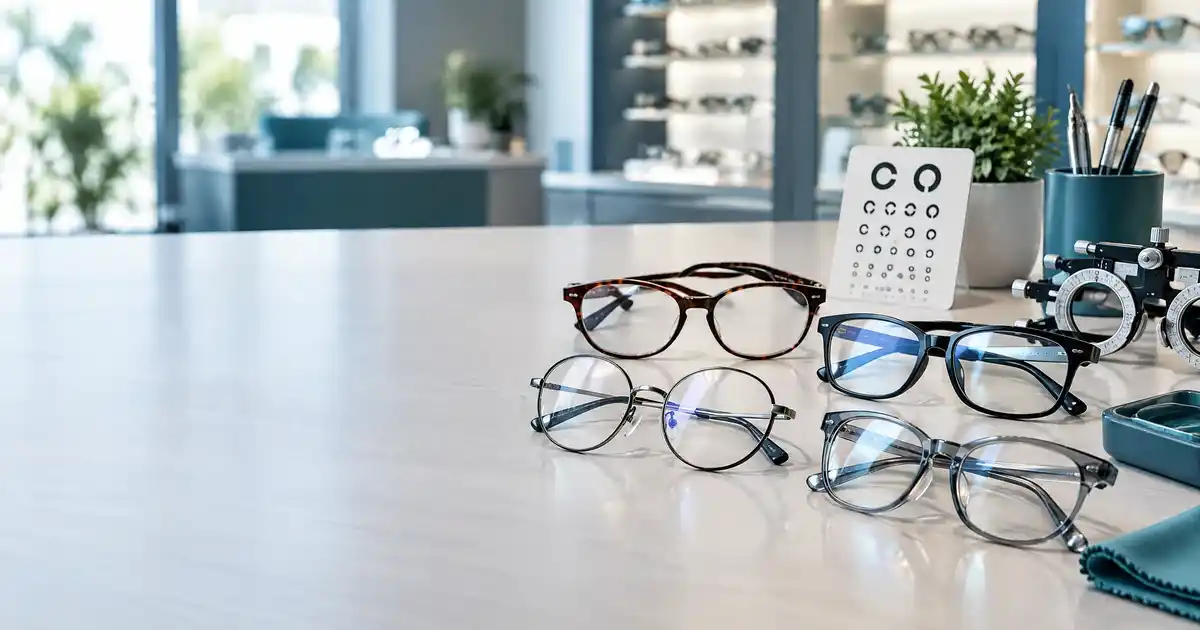
How to Choose the Right Prescription Glasses for Your Daily Needs
Discover with Dr. Khalil how to choose the right prescription glasses for your daily needs, from frame size and fit to suitable lenses for reading, work, computer use, and driving.
Prescription glasses are an important part of everyday life for many people who need correction for nearsightedness, farsightedness, astigmatism, or age-related changes in near vision. However, choosing glasses is not simply a matter of selecting an attractive frame. Lens prescription, frame fit, lens design, visual needs, and the activities performed throughout the day all influence comfort and visual quality.
Understanding How to Choose the Right Prescription Glasses for Your Daily Needs? can make the selection process more practical and personalized. A detailed eye examination should come first, followed by a careful assessment of frame size and lens requirements. Dr. Khalil Ibrahim Hijazi Consultant & Ophthalmic Surgeon provides specialized eye assessments that help patients understand their visual needs and consider suitable corrective options with attention to comfort, accuracy, and everyday performance.
Essential Principles for Choosing the Right Prescription Glasses
Choosing the right prescription glasses begins with an accurate understanding of your visual correction rather than with the appearance of the frame. The prescription may include correction for distance, near vision, astigmatism, or more than one visual range.
Daily activities are also important. Someone who mainly reads books may have different requirements from someone who spends eight hours at a computer or frequently drives. For this reason, there is no single pair of glasses that is universally ideal for every person.
Age, working distance, screen use, lighting conditions, driving requirements, and the number of hours the glasses will be worn should all be considered when selecting the most appropriate solution.
How to Choose the Right Prescription Glasses?
The question How to Choose the Right Prescription Glasses? should begin with an eye examination. The examination helps determine the prescription required for each eye and identifies whether astigmatism or other visual factors need correction.
The next step is to identify the main purpose of the glasses. They may be intended for distance vision, reading, computer work, driving, or a combination of several activities.
It is useful to tell the eye-care professional about your daily routine, including how much time you spend in front of digital screens and whether you drive during the day or at night. These details can influence the lens design that may be appropriate.
Glasses should not simply be copied from another person's prescription because individual visual requirements, measurements, and eye conditions differ.
The Right Prescription Glasses for Your Needs
The right prescription glasses depend on the visual tasks you perform most often. A person who frequently moves between near and far distances may require a different lens design from someone who works mainly at one distance.
People who experience age-related difficulty focusing at close range may need reading glasses or multifocal lenses, depending on their examination results and lifestyle.
Myopia, hyperopia, and astigmatism can also influence the type of correction required. A broader explanation of these refractive errors is available in The Difference Between Myopia and Hyperopia and How to Choose the Right Treatment.
Tips for Choosing Prescription Glasses
Practical Tips for Choosing Prescription Glasses include:
Have your vision checked when your prescription needs updating.
Explain how you use your glasses throughout the day.
Choose a frame that remains stable without uncomfortable pressure.
Match the lens design to the working and viewing distances you use most.
Consider lens coatings and materials according to your needs.
Avoid choosing glasses based only on appearance or price.
Seek an eye examination if vision changes persist despite wearing glasses.
A comprehensive eye assessment can also be useful when new symptoms appear rather than assuming that a stronger prescription is automatically required. More information about eye assessment is available in Comprehensive Eye Examinations for Early Detection of Vision Disorders.
Choosing a Prescription Glasses Frame According to Your Needs
The frame affects comfort, stability, and the position of the lenses in front of the eyes. Choosing a Prescription Glasses Frame should therefore involve more than appearance.
A suitable frame should remain stable during normal movement and place the lenses appropriately in front of the eyes. Weight, bridge design, temple length, facial width, and daily wearing time can all influence comfort.
People who wear glasses for many hours may benefit from a lightweight and comfortable frame, while children or highly active users may place greater importance on durability and stability.
Choosing a Prescription Glasses Frame
When Choosing a Prescription Glasses Frame, make sure the frame width is appropriate for your face and that the eyes are positioned properly within the lens openings.
The frame should not press excessively against the nose, temples, or ears. It is useful to move the head, look downward, and perform normal movements while trying the frame to make sure it does not slide easily.
The frame size may also be influenced by the prescription. Certain prescriptions, particularly stronger ones, may require an appropriate frame size and shape to achieve a practical lens design.
Prescription Glasses for Different Face Shapes
Choosing Prescription Glasses for Different Face Shapes should balance appearance, comfort, and function. Facial width, forehead shape, jawline, nose position, and eye placement can affect how a frame fits.
Face-shape guidelines can provide a starting point, but actual fit is more important than a general aesthetic rule. A frame that looks suitable on another person may not sit correctly on your face.
A visually attractive frame is not useful if it constantly slips or creates pressure during prolonged wear. Comfort and proper positioning should therefore remain central to the selection process.
Choosing the Correct Prescription Glasses Size
The Prescription Glasses Size influences comfort and lens positioning. Frame measurements typically include lens width, bridge width, and temple length, while the position of the eyes within the frame also matters.
A frame that is too wide may slip during movement, while a frame that is too narrow can create pressure around the temples and ears.
Accurate positioning can become particularly important with certain prescriptions and multifocal lenses. The frame should therefore be selected and measured appropriately before the lenses are manufactured.
How to Choose Prescription Glasses Lenses
Choosing Prescription Glasses Lenses is as important as selecting the frame because the lenses provide the actual optical correction. Lens design, material, coatings, and visual range should correspond to the prescription and the user's lifestyle.
Different lens options may be designed for single-distance correction, multiple distances, reading, office work, or everyday use.
The most appropriate lens should not be selected based on a single advertised feature. The decision should begin with the prescription and the distances at which the person needs clear vision.
Choosing Prescription Glasses Lenses
When Choosing Prescription Glasses Lenses, start with the prescription and then consider daily visual requirements.
Single-vision lenses may be suitable when correction is needed for one main distance. Multifocal designs may be appropriate for people who require correction across different viewing ranges.
Other considerations may include lens material, scratch resistance, ultraviolet protection, and anti-reflective coatings, depending on the specific lens and the patient's needs.
For a broader comparison of corrective options, see Contact Lenses or Prescription Glasses: Which Is Better for Daily Life?.
Types of Prescription Glasses Lenses
There are several Types of Prescription Glasses Lenses, including:
Lens type | Common use | Main characteristic |
|---|---|---|
Single-vision | One viewing distance | Corrects distance or near vision |
Multifocal | Several distances | Provides more than one visual range |
Reading lenses | Near tasks | Designed for close vision |
Office lenses | Near and intermediate work | Useful for certain workplace activities |
Anti-reflective lenses | Everyday and screen use | Helps reduce surface reflections |
No lens type is automatically the best for everyone. Selection depends on the prescription, age, lifestyle, working distance, and visual requirements.
Suitable Prescription Glasses Lenses
The suitable prescription glasses lenses depend on the activities performed throughout the day. Someone who alternates frequently between reading and distance vision may have different needs from someone who works at a fixed intermediate distance.
Lighting, screen distance, sensitivity to glare, and working environment can also influence certain lens features.
If vision remains blurred or uncomfortable despite wearing glasses, it is preferable to reassess the eyes and prescription rather than simply increasing lens power. More information about astigmatism is available in Astigmatism: Causes, Symptoms, and the Best Vision Correction Options.
Choosing Prescription Glasses for Everyday Use
Daily visual demands can change significantly between work, reading, computer use, and outdoor activities. Choosing Prescription Glasses for Everyday Use therefore requires consideration of the full daily routine.
Some people may benefit from separate glasses for different tasks, while others may be suitable candidates for multifocal designs after an appropriate examination.
Comfort is especially important when glasses are worn for long periods. A frame that causes pressure or repeatedly slides down can reduce the practical benefit of otherwise appropriate lenses.
Prescription Glasses for Work
Prescription Glasses for Work should match the demands of the job. Someone working with documents and a computer may need clear vision at both near and intermediate distances, while a person working outdoors may have different requirements.
Lighting, posture, monitor height, and viewing distance can also affect visual comfort. Adjusting the working environment can therefore complement the choice of prescription glasses.
If a person frequently changes between near, intermediate, and far distances, different lens designs can be discussed based on the eye examination and actual working distances.
Prescription Glasses for Computer Use
Prescription Glasses for Computer Use may differ from conventional reading glasses because the computer screen is usually positioned farther away than a book.
The actual working distance should therefore be considered when assessing the appropriate correction. Regular visual breaks, suitable screen brightness, readable text size, and an appropriate viewing distance can also improve comfort.
Additional practical recommendations can be found in Daily Tips for Eye Health and Reducing Screen Strain.
Prescription Reading Glasses
Prescription Reading Glasses are designed to provide clear near vision when close-range correction is required. However, the appropriate power should be determined according to the individual's visual needs, particularly when the two eyes have different prescriptions.
Some people may only need reading glasses, while others may benefit from multifocal lenses if they require clear vision at several distances.
New or sudden changes in vision, double vision, or unexplained persistent blur should not simply be treated as a need for stronger reading glasses. An eye examination may be necessary.
Choosing Prescription Glasses for Driving and Daily Activities
Driving requires clear and stable vision, particularly when moving between different distances and dealing with reduced light. Choosing Prescription Glasses for driving should therefore consider distance vision, visual field, comfort, and the specific requirements of the driver.
Glare, reflections, dirty lenses, scratches, and poor frame positioning can also affect visual comfort while driving.
Prescription Glasses for Driving
When choosing Prescription Glasses for Driving, distance clarity and a stable visual field are important considerations.
Anti-reflective coatings may help reduce reflections from the lens surface in certain situations, but they do not replace an accurate prescription or appropriate eye examination.
Keeping lenses clean and replacing severely scratched lenses can also contribute to clearer vision, particularly when facing headlights or other strong light sources.
Best Prescription Glasses for Everyday Use
There is no single Best Prescription Glasses option for every individual. The appropriate choice depends on the prescription, age, lifestyle, working distance, frame fit, and the activities performed throughout the day.
Glasses should therefore be considered a personalized optical solution rather than a standardized product. Frame, lenses, measurements, and daily requirements all need to work together.
For people considering alternatives to glasses, the suitability of other vision-correction options depends on an individual assessment. More information is available in Laser Vision Correction in Istanbul: Who Is Suitable and What Results Can Be Expected?.
Factors Affecting the Choice of Prescription Glasses
The main Factors Affecting the Choice of Prescription Glasses include:
The degree of myopia, hyperopia, or astigmatism.
Age and near-vision requirements.
Daily wearing time.
Computer and digital-screen use.
Reading and driving requirements.
Facial shape and frame measurements.
Lens design and material.
Frame comfort and stability.
Lighting and environmental conditions.
Any new or persistent visual symptoms.
Considering these factors together can lead to a more personalized solution than choosing glasses based only on appearance.
Conclusion
How to Choose the Right Prescription Glasses for Your Daily Needs? depends on a combination of accurate vision correction, appropriate lenses, correct frame measurements, and the activities performed throughout the day. Reading, computer work, driving, and prolonged wear can each create different visual requirements.
Dr. Khalil Ibrahim Hijazi Consultant & Ophthalmic Surgeon focuses on individual assessment so that patients can better understand their visual needs and consider suitable corrective options. Changes in vision should also be evaluated rather than automatically assuming that a new pair of glasses is the only solution.
A more comfortable visual experience can begin with an accurate assessment by Dr. Khalil and a prescription-glasses solution suited to your daily routine.
Frequently Asked Questions
Related Articles
Sports Eye Injuries: Prevention and Immediate Treatment
Sports Eye Injuries: Prevention and Immediate Treatment explains common sports-related eye injuries, first aid, prevention, protective eyewear, and warning signs requiring medical evaluation.
When Do You Need a Comprehensive Eye Exam Without Symptoms?
Protect your vision with Dr. Khalil! Learn when you need a comprehensive eye exam without symptoms and how early detection can help preserve healthy vision.
Optic Nerve Atrophy: Causes, Symptoms and Treatment
Protect your vision with Dr. Khalil! Discover the causes and symptoms of optic nerve atrophy, the importance of early diagnosis, and available treatment options to preserve remaining vision.
Routine Eye Examinations for Children and Their Importance for Healthy Visual Development
Routine Eye Examinations for Children and Their Importance for Healthy Visual Development help detect vision problems early and support normal visual growth with specialized care from Dr. Khalil.